
A GBJ Series · Beyond the Resource Curse
Article 3 of 12
A vault, a university, and what breaking a curse on purpose actually costs.
This essay is part of the twelve-part series “Beyond the Resource Curse.” Read the foreword, “The Autonomous Imagination.”
The last piece ended with a warning. A curse broken by accident stays broken only until the next boom. A curse broken on purpose is the only kind that holds. So let we talk plain about what “on purpose” actually looks like. Good intentions alone never yet saved a country from itself. Good food can’t come from bad mind.
A Vault Is Not Enough
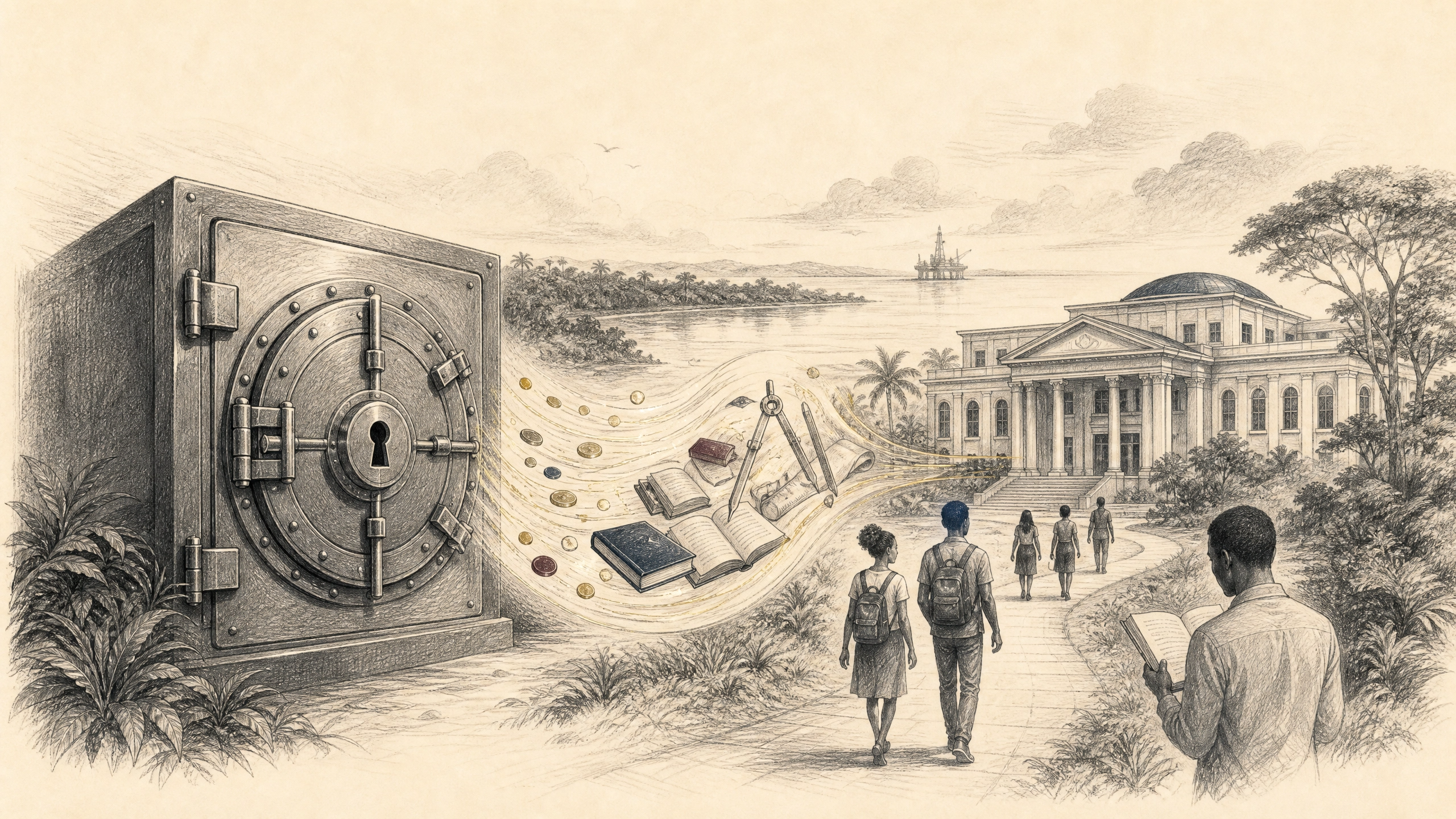
Guyana already has the beginnings of the right instrument. The Natural Resource Fund now holds billions of US dollars. On paper it does exactly what Norway’s fund does. It takes money that would otherwise vanish into a single budget cycle. Then it turns that money into something that outlives the government that collected it. But a fund is only as sovereign as the law protecting it. And law is only as sovereign as the politicians who must leave it alone when the pressure comes. We have watched the rules around that fund get amended before. A vault with a door that opens whenever someone important gets impatient is not a vault. It is a wallet with extra steps.
A vault with a door that opens whenever someone important gets impatient is not a vault. It is a wallet with extra steps.
— N.P.
This is the same test every resource nation faces, and the same test most of them fail. The economics are not mysterious. Royalties, sovereign wealth funds, and local content requirements work the same way the world over. In fact, every finance ministry knows it. The discipline, however, is what defeats us. That discipline is generational, and our politics runs on the next election cycle, not the next generation. Bauxite taught us this lesson once. Gold has been teaching it to us in installments for over a century. Oil is only the latest, loudest classroom.
Where the Money Has to Land
If the fund is the vault, the institutions are the hands that open it. In turn, they decide what comes out and where it goes. Here the argument from the first piece in this series comes back around. An autonomous imagination tells a nation not to spend the money but to convert it. Convert it into people, into capability, into a public service that audits itself before anyone asks.
That conversion has a natural home, and this series has been circling it from the start: education. Not the kind that merely credentials workers for whichever industry is hiring this decade. The kind that builds a citizenry capable of holding its own government to account. A National Development University, financed properly and shielded from politics, is not a nice-to-have beside the resource fund. Rather, it is the other half of the same machine. The fund converts oil into capital. The university converts capital into capability. Neither one works alone. A fund with no university to spend on rebuilds nothing. A university with no independent money answers to whoever signs its budget that year.
What “On Purpose” Actually Costs
Of course, none of this is free, and none of it is quick. It costs political leaders the temptation to raid the fund in an election year. It costs a bureaucracy the comfort of escaping measurement. And it costs the diaspora an honest reckoning. The writers and painters and thinkers this series has already named — those who left, and those who stayed. Why do capable people keep choosing somewhere else? Yuh cyan swim ah river and cuss crocodile. After all, we built the incentives that sent our best people away. We should not act surprised when they stay away, and we cannot fix it by wishing harder.
But the alternative is the one Guyana has already lived three times over. Money arrives. Government spends it on the appearance of progress. In the end, nothing survives the boom that funded it. The autonomous imagination this series opened with is no poetic flourish. It is the precondition for fiscal policy, not an ornament beside it. A people who cannot author their own institutions will only rebuild the ones that failed them. A people who can will build a fund that holds, a university that lasts, and a government that answers to citizens taught, deliberately, how to ask.
The Argument So Far
That is the argument so far: reclaim the mind, name the curse, build the institutions that hold. What comes next is the longer, unglamorous history of how we got here. And why we still have to do that work on purpose.
Next Wednesday: Article 4 of 12, “Before the Flag Came Down.”
Beyond the Resource Curse — A GBJ Series
The Guyana Business Journal is supported by:
Metallica Commodities Corporation
metallicacc.com
Sponsorship supports independent Guyanese analysis; sponsors play no role in the Journal’s editorial decisions.
Pebble Stream™
pebblestream.com
Sponsorship supports independent Guyanese analysis; sponsors play no role in the Journal’s editorial decisions.
Caribbean International Shipping Services
caribshipatl.com · 770-322-3111
Sponsorship supports independent Guyanese analysis; sponsors play no role in the Journal’s editorial decisions.
MCCGUSA
mccgusa.com · 212-269-6126
Sponsorship supports independent Guyanese analysis; sponsors play no role in the Journal’s editorial decisions.
…and by individual supporters of independent Guyanese analysis: Courtney Noel | All Te Networks | Corine Locke | Tony Harris | Roderick Alsopp | Dr. Michelle Luard | Clarence Bone
