
Transforming Guyana · Webinar Report
Three Rehearsals: Gold, Bauxite, Timber — and the Test of Oil
Oil is not Guyana’s first boom. It is the fourth sitting of an exam the country has failed three times.
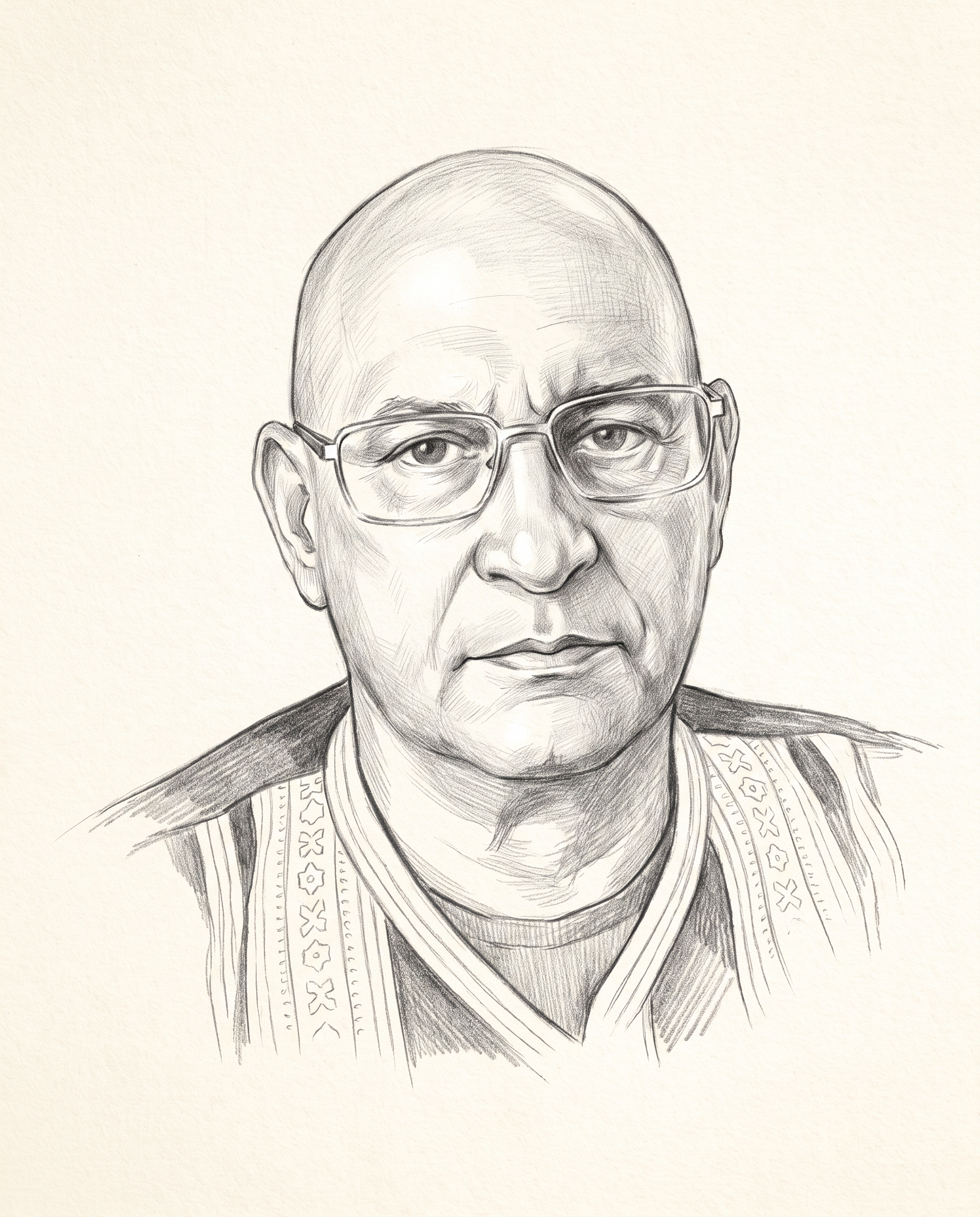
A report on the Season 5 opener of Transforming Guyana, Tuesday 27 October 2026 — a conversation with Dr. Rory Fraser, forest economist, hosted by Dr. Terrence Richard Blackman.
Guyana Business Journal · 7 November 2026
Oil is not Guyana’s first boom. It is the fourth sitting of an examination the country has already failed three times. That was the argument Dr. Rory Fraser brought to the Season 5 opener of Transforming Guyana. The host was Dr. Terrence Richard Blackman, founder and publisher of the Guyana Business Journal. Before oil, Guyana had gold, bauxite and timber. Each arrived as a fortune; yet each left too little behind. The evening’s question was what those three rehearsals have taught us, and whether we are listening.
In This Piece
- The guest
- Five years, one question
- Extraction or retention
- Rehearsal one: bauxite
- The view from the accounting section
- Rehearsal two: timber
- What a forest is worth
- Rehearsal three: gold
- The fourth sitting: oil
- Three failures, four booms
- Let the money pass through
- The autonomous imagination
- The university’s charge
- A word to the 21-year-old
- After the hour
The guest
Fraser is a Guyanese forest economist whose career has run where forest policy meets the university. He began in Guyana as a science teacher and with the forestry commission. After studying at the University of New Brunswick, he earned his master’s and doctorate in forestry at Penn State. He worked in Jamaica’s forestry industry and taught economics at West Virginia University. From about 2000 he was professor of forest economics and policy at Alabama A&M University. There he directed the Center for Forest Ecosystem Assessment, led a $5 million National Science Foundation project, and served as president of the Faculty Senate. Since 2009 he has worked on projects with the University of Guyana, and he was twice shortlisted for its vice-chancellorship.
His answer, across the hour, was consistent. In each boom Guyana let others capture the value, underfunded the people charged with regulating the industry, and failed to keep the knowledge the industry brought. Oil repeats the pattern at a far higher level of difficulty. Above all, the remedy he returned to, again and again, was education.
Five years, one question
Blackman opened by marking where the series began. In November 2021 the Guyana Business Journal and the Caribbean Policy Consortium held the first of these conversations. It was a webinar on strategic considerations for local content requirements in Guyana. It built on Dr. Jerry Haar’s study of the same name, with Dr. Anthony Bryan and Blackman on the panel and Dr. David Lewis of the Caribbean Policy Consortium moderating. Blackman thanked the Consortium for a partnership that set the course for everything since.
The question has grown in five years, he said, but it is the same question: how does Guyana turn the oil economy into lasting national capability? This episode came at it from behind. Its starting point was “Gold, Bauxite, Timber: Three Rehearsals,” the sixth essay in the Beyond the Resource Curse series on the GBJ. Most young Guyanese meet oil as something wholly new. Blackman asked why it matters to see it as the fourth boom rather than the first.
Extraction or retention
Fraser’s answer began at Queen’s College. As a student there he heard Forbes Burnham tell the boys that Guyana’s destiny was in their hands. He called it “a terrible thing” to say to a poor boy among brilliant classmates and teachers, all of it free. In that country, nearly everyone in power was a QC old boy. As a result, he began asking what he could do for Guyana. Then he met Ernest Dow, who pointed to the forest and told him, “This is our future.” Some 95 percent of the country is forest, and Guyanese live on the other five. So forestry became his answer and, eventually, the subject of his doctorate on forest-based economic development.
He asked the audience to hold one distinction throughout. Colonial resource development asked how to extract the maximum value and carry it home to the metropole. Companies from the “motherland” enjoyed access and every assistance. That legacy, he said, explains much of how bauxite, gold and, in part, timber were run. National resource development, the task after independence, asks something different. It asks how to create value and use it to build other things in the society, retaining wealth at home. That wealth may be monetary, social or ecological, so long as it can sustain the society over time.
Guyana, in his account, has moved formally from the first model to the second. In practice, however, it keeps reverting. When ExxonMobil announced the oil discoveries in the Stabroek Block, he said, he was deeply concerned. He had seen it before: when the state nationalised bauxite, when Omai came for gold, and when Barama came for timber. Each time, a few people benefited and the vast majority stood outside.
Rehearsal one: bauxite
Fraser took the audience to Mackenzie, the town now called Linden, in its company-town years. It was a Canadian town in all but location. The aluminium companies built it to house the workers who extracted ore, which the aircraft industry prized after the Second World War. Those inside the enclave were well paid, well fed and well housed. Some were Guyanese and doing very well, he recalled, but the people in charge were Canadians and other expatriates.
The government judged that the royalties it received were too small. It sought a 51 percent stake. When the companies refused, it eventually took over the whole operation. The companies owned the equipment and buildings, so the state had to compensate them for a going concern. It would pay that debt down over about twenty years. Afterwards, young Guyanese managers moved in, many of them Fraser’s seniors.
The view from the accounting section
Fraser saw the result from inside. In 1977 he joined the company as a computer science cadet, working in the accounting section while it digitised its reports. The workforce, he said, had roughly doubled to meet social objectives, while productivity fell by more than half. Consequently, decisions lost the discipline of a business. Equipment and infrastructure likewise went unmaintained. The country had no control over world markets, and competitors grew cheaper. Meanwhile, the foreign-exchange crisis of the late 1970s blocked the investments the industry needed.
The lesson, in his words, is that you do not jump into things unless you have a good handle on them. A foreign company can arrive with knowledge and run an enviable operation. Acquiring it demands skills, relationships and clear objectives that Guyana did not assemble. He added a point that recurs through all three rehearsals: the state never published the statistics he saw as a cadet. Then, as now, the state kept a veil over the information that guided its decisions. Indeed, he finds it easier to get data on Guyana outside the country than inside it.
The industry later declined, revived in the 1990s, and passed through Russian and Chinese hands. Most recently, after some twenty years of neglect, American interests took what remained. Set beside oil, Fraser said, bauxite was child’s play.
Rehearsal two: timber
After his doctorate in the 1990s, Fraser went back to Guyana every year. He made himself available to the forestry commission, the University of Guyana, the EPA. One episode from that period became, for him, the clearest symptom of the problem. He was guiding a master’s student in forest economics, an experienced teacher of the subject. The student’s thesis estimated stumpage value: the price paid for the right to fell a standing tree.
The student used the standard textbook method. Start from the price of the final product, subtract every cost and every profit along the chain back to the stump, and what remains is the tree’s value. One assumption, however, stopped Fraser. Whoever buys the stump, the method held, must earn at least a 4 percent return. Every party along the chain is entitled to its profit, and the nation, which owns the forest, takes whatever is left.
Fraser’s objection was that a nation selling its resource should hold a reservation price: a floor below which it will not sell, whatever the pressure. The residual-value mindset, he argued, is not one student’s error. It is how Guyana has educated its professionals, including those in the forestry department, to think about their own resources.
What a forest is worth
The Guyana–Norway agreement later widened the frame. A forest’s value lies not only in its timber but in the water it yields, the carbon it holds and the soil it protects. Destroying those carries a heavy replacement cost. Even so, those concepts, Fraser said, remain hard for Guyanese to grasp. The deeper point is about value itself. Money matters for the quality of life it buys: well-being, community, a sense of place. Money cannot buy those things, but assets create the opportunity for them.
His own estimates for forestry, moreover, were stark. When the state leased forest land to companies, it spent more on regulating them than it collected in revenue. Worse, that revenue went to the general budget, not back into managing the resource. In effect, Guyana subsidised the companies that came to profit from its forests. It should have extracted more from them and required more of them. In each sector, after all, the companies took the value while damaging the environment and offering dubious working conditions. They did so far from the attention of most Guyanese.
Rehearsal three: gold
Gold is the oldest of the three stories. It is why Walter Raleigh came looking for El Dorado, and it runs through Fraser’s own family. His father’s stepfather left China, crossed North America and came down to Guyana in 1928 to work the goldfields. For generations gold meant small operators and the lore of the porknocker.
That changed in the 1990s, Fraser said, when the authorities redrew the mining map into plots for which people could apply. Almost overnight, and with little public notice, a few holders gained control of very large areas, some of which they sublet. Large companies such as Omai then followed, bringing capital and the technology for hard-rock mining. They also aggregated output from smaller miners, which at least let the state see what was produced and collect royalties and taxes.
Yet much of the gold, he noted, citing estimates as high as 85 percent, never entered the record. Smuggling, undervaluation and under-declaration are open secrets. By his estimate gold paid the state about six times what it spent managing the sector. Yet the state paid its oversight officers a pittance. In short, Guyana never built the regulatory muscle the industry required. Blackman observed that gold sits at the centre of Guyana’s politics today. El Dorado, he said, is still alive.
Fraser called gold the closest of the three to the problem Guyana now faces. The constant across all three is the same. The country is willing to let others use the resource. It is unwilling, however, to spend from the proceeds to make sure they do what they are supposed to do.
The fourth sitting: oil
Now the stakes are billions of dollars, and the question is sharper. How much is Guyana spending to make sure the oil companies do what they are supposed to do for the country? What the moment requires, Fraser said, is not the work of one person or ten. It needs a hundred or a thousand Guyanese sitting down to ask how to organise themselves, now that “the big boys are coming.”
Blackman described his own moment of recognition. Years ago at the University of Michigan he heard a sophisticated talk by Cassandra McZeal, a mathematician at ExxonMobil. Later he learned of the company’s large doctoral-level operations-research effort in Houston, linked to Rice University. He concluded, in short, that Guyana was entirely outgunned. The Transforming Guyana series, which began with local content, was his small answer: at least to give people ways to frame what they were doing.
Three failures, four booms
Fraser named three failures that run through all three rehearsals and now through oil.
- Technology brought in but never transferred. Foreign staff came, worked and left. The Guyanese who did acquire skills often emigrated because nothing kept them.
- Advisers in place of nationals. Bilateral and multilateral partners sent experts who lived well and departed, leaving no institutional memory. Fraser cited his own case. In the 1990s he was in consideration to head the EPA, but the post went to a Swedish expert earning about three times as much.
- No support-services complex. His dissertation found that an industry does not exist because the resource is in the soil. It exists inside a ring of technical skills, parts suppliers and further processing. Guyana built that ring around none of its three booms.
Moreover, oil compounds the problem. Companies pump it some 150 miles offshore and load it straight onto ships, and the money flows into a bank abroad. “For me, the oil company does not even exist in Guyana,” Fraser said. He questioned what gross domestic product even means for revenue that never touches the country. Blackman put it plainly. Lifting oil from the Atlantic floor technically needs no Guyanese, so Guyana risks being a mere pass-through. Not even that, Fraser replied.
For me, the oil company does not even exist in Guyana.
— R.F.
Let the money pass through
He did not object to the companies making money. He wanted to see the money pass through Guyana. That means the state spending it at home: on education, and on policing and supervision of the industry. It means paying for the support services that foreign firms now supply. It also means contracts for roads and bridges that use Guyanese firms and labour, rather than imported crews who move on to Suriname. Nor does anyone keep records that would show how much of the coming billions actually touches Guyana. Guyanese, he said, do not want a welfare cheque. They want the chance to build a future at home. He pointed to food prices: why import chicken, he asked, when Guyana can produce it?
Blackman raised the obvious precedent. Aberdeen, Scotland, built a whole infrastructure of capability around North Sea oil. Assuming every government means well, he asked, why have successive leaderships found the most obvious step, owning the resource intellectually, the hardest to take?
The autonomous imagination
Fraser took up a phrase from the Beyond the Resource Curse series: the autonomous imagination. It means the capacity of a people to own themselves and their thinking, a frame the series draws from George Lamming and Ngũgĩ wa Thiong’o. That capacity, he said, is where Guyanese fall short. Guyana has had great minds, but there is a disconnect between the arts and the sciences, and an unsettled sense of who Guyanese are. Ask how something is done and you hear how it is done in Berbice, not how it is done in Guyana.
For him there is no silver bullet, except one: education. After all, people cannot value what they do not understand. For decades he has heard Guyanese call the country too small, too inaccessible, rich in timbers that are not mahogany. That, however, is value as others define it. Mahogany and diamonds are valuable because people taught the world to see them so. A country that cannot name its own value will always be judged by someone else’s.
Education, in his account, is acculturation: from home to primary school to secondary school to university, each widening the horizon and placing a person in the society. Yet Guyana has not built that nurturing path. He insisted this is not a partisan point. It is a Guyanese problem, and every party’s politicians suffer from it, because Guyanese keep electing them. Ideas move societies, he said, for good or ill; the figures who galvanise followings today prove it. Guyana’s difficulty is not a shortage of ideas but of the shared understanding needed to turn them into change.
The university’s charge
That is why he sees the university as the place where the work must happen. The University of Guyana, he said, is at once inspiring and deeply disappointing to him. He has watched bright young minds walk through its doors and leave as bleak individuals. The experience, he said, does not encourage creativity, thoughtfulness or reflection. Problems and solutions are easy to identify, he said. The hard part is galvanising change, and that cannot happen without understanding of what needs to be done.
A word to the 21-year-old
Blackman closed with the listener he had in mind all evening. A Guyanese who is 21 in 2026 was born in 2005 and has come of age without the acculturation Fraser described. What should that young person know, he asked, so that oil looks less like a winning lottery ticket and more like an exam sat for the fourth time? We have read the syllabus, he said. We know what the paper looks like. And we have failed it before. Passing this time is on them more than on us.
Fraser answered with candour. Later in life, he said, you may conclude you got much of it wrong. He had internalised a great deal, and it sometimes made him less effective in bringing about the change he wanted. He would not hand young people a blueprint, because the challenge is theirs to take on in their own way. Instead, what he could offer was what has kept him alive to the question: curiosity, imagination and the pursuit of personal growth. He has seen the beauty of the place and the brilliance of its people. Guyana, he said, has the chance to create something unlike anything else on earth. He may not see it in his lifetime, but the aspiration still moves him: “we can make this land our land.”
We can make this land our land.
— R.F.
After the hour
Before signing off, Fraser offered to share his longer written work on these questions. That work includes recommendations for holding governments accountable for how they allocate and use resources, and for the benefits those resources deliver. Blackman welcomed the offer and pointed viewers to the Three Rehearsals essay in the Beyond the Resource Curse series on the GBJ. The conversation is available on demand on the GBJ’s channels.
The series returned the next day, Wednesday 28 October, with Dr. Vishnu Doerga, author of BANKABLE, on moving from economic growth to bankable Guyanese businesses.
Gold, bauxite, timber: three rehearsals.
Oil is the fourth sitting, and this time the paper is ours to pass.
About the series. Transforming Guyana is the Guyana Business Journal’s webinar series on turning the oil economy into lasting national capability, hosted by Dr. Terrence Richard Blackman, Founder and Publisher of the GBJ, Dean (Interim) of the School of Science and Allied Health and Professor of Mathematics at Medgar Evers College, CUNY. The views expressed are those of the participants and do not represent Medgar Evers College or the City University of New York.
Note on Sources
This report draws on the recorded Transforming Guyana conversation of 27 October 2026, streamed live on StreamYard, Facebook and LinkedIn. We have lightly edited quotations for clarity. Figures attributed to Dr. Fraser, including the share of unrecorded gold and the cost of regulating forestry and gold, are his estimates as stated in the conversation. The full recording is available on demand on the GBJ’s channels.
With Thanks to Our Sponsors
metallicacc.com
pebblestream.com
Our sponsors have no role in the Journal’s editorial decisions.
With thanks also to our individual supporters: Courtney Noel | All Te Networks | Corine Locke | Tony Harris | Roderick Alsopp | Dr. Michelle Luard | Clarence Bone
🇬🇾 Support independent Guyanese journalism — donate to the GBJ
