
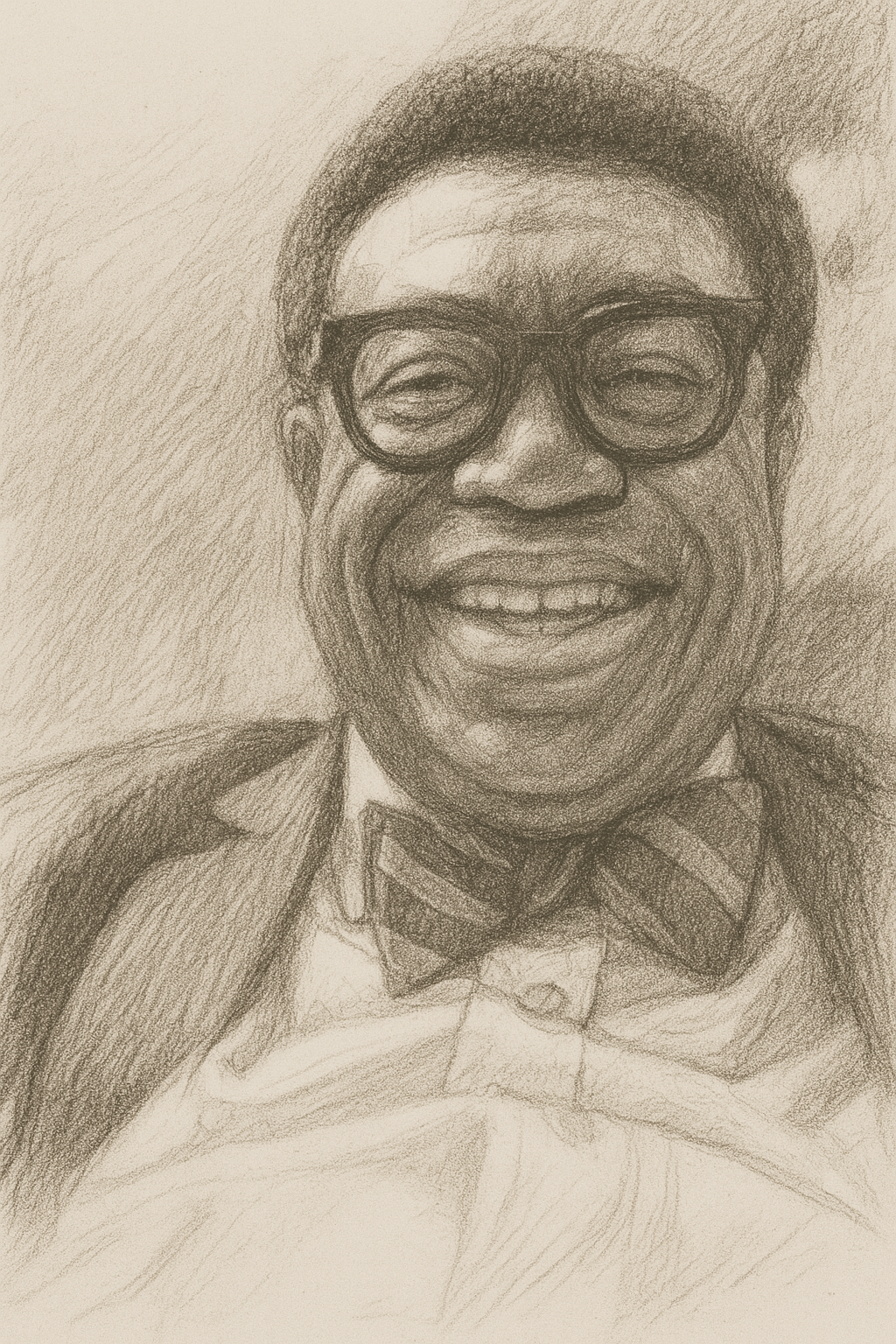
Letter from America: The One Big Beautiful Warning
By Terrence R. Blackman, Ph.D.
I am staring at my Western Union App this morning—one of those modern conveniences that serves as a financial lifeline between the American dream and the Caribbean reality—when I imagine a conversation that perfectly captures what’s happening in Washington these days.
A Jamaican woman was explaining to her teenage son why she was sending less money home this month. “They’re putting a tax on it now,” she said, her voice carrying that mix of resignation and indignation that we immigrants know well. “Three and a half cents on every dollar. That’s fifteen dollars less for your grandmother.” The boy, born here, raised here, looked genuinely puzzled. “But why, Mom? It’s your money.” She just shrugged. “Because they can.”
That shrug, my friends, tells you everything you need to know about what Congress calls the One Big Beautiful Bill Act—though I suspect it looks considerably less beautiful from a Western Union counter in East Flatbush than it does from the marble corridors of Capitol Hill.
The bill passed the House last month by the narrowest of margins—215 to 214—and is now making its way through the Senate, where it’s being scrutinized and reassembled like a complicated piece of furniture with instructions in a foreign language. But the basic architecture remains the same: this is America’s attempt to reshape its relationship with the world, one tax code and budget line at a time.
Now, you might reasonably ask why a piece of American domestic legislation should concern anyone beyond America’s borders. The answer lies in something that Washington has never quite grasped: that in our interconnected world, there’s no such thing as purely domestic policy when you’re the world’s largest economy. Every American decision ripples outward, and nowhere are those ripples felt more keenly than in the Caribbean, where entire communities have organized their lives around the assumption of American partnership.
Let me explain what this bill actually does, because the name—typical of modern American political marketing—tells us nothing useful. Think of it as three bills wrapped in one: a tax cut extension, a budget axe, and an immigration crackdown. The tax part extends the cuts that Donald Trump signed in 2017, which were always meant to expire at the end of this year. The budget part slashes spending on programs that help the poor. And the immigration part throws $75 billion at deportation efforts—roughly eight times what the government currently spends on removing people from the country.
If you’re keeping score at home, that’s a lot of spending cuts to pay for a lot of tax cuts, with a massive immigration enforcement expansion thrown in for good measure. The Congressional Budget Office—America’s fiscal scorekeeper—says the whole package will add about $3 trillion to the national debt over the next decade. But that’s Washington math, where trillion-dollar numbers are tossed around like pocket change.
The real story, though, is what this means for places like Guyana, Jamaica, Trinidad, and Barbados—countries that have spent the last half-century building their development strategies around the movement of their people to and from America. That remittance tax I mentioned isn’t just a revenue raiser; it’s a philosophical statement. It states that helping your family back home is no longer just a private matter between you and your relatives—it’s now a transaction from which the U.S. government has decided to take a cut.
I’ve spent enough time in Caribbean communities here to know what remittances really mean. They’re not charitable giving in the traditional sense. They’re insurance policies, school fees, medical bills, and grocery money. They’re the economic equivalent of family ties made visible. When a nurse in Queens sends $200 to her mother in Kingston, she’s not making a political statement—she’s paying for her nephew’s school books and her father’s diabetes medication.
But Washington sees something different. It sees an untapped revenue stream, a way to raise money from people who can’t vote but can’t afford to stop sending money home either. It’s taxation without representation in its purest form, which is perhaps why it bothers me more than it seems to bother the congressmen who voted for it.
The immigration provisions are even more troubling, though they’ve received less attention in the Caribbean press. The bill allocates enough money to ICE—that’s Immigration and Customs Enforcement—to more than double its detention capacity. They’re discussing holding 100,000 people at any given time, which is roughly equivalent to the population of Spanish Town or Chaguanas. These aren’t people convicted of serious crimes, mind you. These are individuals whose primary offense is being in the wrong place at the wrong time without the necessary paperwork.
That’s the human face of policy, and it’s a face that American lawmakers rarely see. They see statistics, budgets, and political talking points. They don’t see the family on Robb Street in Georgetown wondering why the money from their son in Miami has gotten smaller, or the family in a village in Berbice trying to figure out how to pay for the new roof now that three of their biggest contributors have been sent back home.
The bill also takes an axe to the social programs that many Caribbean immigrants depend on—food stamps, Medicaid, and student loans. The theory, if you can call it that, is that making life harder for poor people will encourage them to work harder or move elsewhere. It’s a theory that has never worked anywhere it has been tried, but it’s politically popular among people who have never had to choose between rent and groceries.
What’s particularly cruel is the education provisions. The bill eliminates subsidized student loans—the kind that don’t charge interest while you’re in school—and makes it harder to qualify for Pell Grants. For a young person from the Caribbean trying to get an education in America, this is like pulling up the ladder just as they’re reaching for the next rung.
I often think of something Alistair Cooke once wrote about America’s tendency to solve problems by making them someone else’s problem. That’s what’s happening here. America has an immigration problem, so it’s going to make it Guyana’s problem by sending people back. America has a budget problem, so it’s going to make it the Caribbean’s problem by taxing remittances. America faces a political challenge with its changing demographics, so it will make it everyone’s problem by retreating from its role as a global partner.
The Senate is likely to modify some details when it inevitably passes the bill. There’s talk of raising the remittance tax, or lowering it, or applying it only to certain countries. There’s debate about the immigration enforcement funding and whether some of those Pell Grant restrictions go too far. But the basic direction seems set: America is turning inward, and its neighbors will have to adjust accordingly.
This isn’t necessarily a catastrophe for the Caribbean. Countries have faced worse challenges and survived. But it does require a fundamental rethinking of development strategies that have been built on the assumption of continued American partnership. Guyana, in particular, with its new oil wealth, has an opportunity to chart a more independent course. But that requires planning, investment, and a willingness to look beyond the familiar patterns of the past fifty years.
I was struck, reading the debates in Georgetown last week, by how little attention this bill has received in Caribbean capitals. Perhaps that’s understandable—there are local elections to fight, local budgets to balance, local problems to solve. However, this American legislation will impact more Caribbean lives than most local laws ever have.
The woman in a Western Union office probably doesn’t know about congressional budget reconciliation processes or the Senate parliamentarian’s role in determining which provisions can stay in the bill. She knows that it now costs more to help her mother pay for groceries. And that, in the end, may be the most important thing to understand about America’s One Big Beautiful Bill: its beauty is very much in the eye of the beholder.
Standing in here in Brooklyn, watching immigrant families navigate our increasingly complicated world, I can’t help but think that we’re witnessing the end of an era—not with dramatic speeches or signed treaties, but with a 3.5% tax on love letters written in dollars and cents. Perhaps that’s how eras always end: not with a bang, but with a fee.
June 29, 2025
The Guyana Business Journal Editorial Board welcomes reflections and submissions at terrence.blackman@guyanabusinessjournal.com.
Guyana Business Journal Editorial Board
June 28, 2025
Support Independent Analysis
The Guyana Business Journal is committed to delivering thoughtful, data-driven insights on the most critical issues shaping Guyana’s future—from oil and gas to climate change, governance, and development. We invite you to support us if you value and believe in the importance of independent Guyanese-led analysis. Your contributions help us sustain rigorous research, expand access, and amplify the voices of informed individuals across the Caribbean and the diaspora.
📢 Please support the Guyana Business Journal & Magazine today
Thank you for standing with us.
Dr. Terrence Richard Blackman
Guyana Business Journal
