guyanabusinessjournal
Guyana: Waiting for ICJ Decision, but also Investing in Security; Part II
By
Ivelaw Lloyd Griffith
This is the second article of a two-part series on the ongoing territorial-judicial saga between Guyana and Venezuela. The first one examined some recent developments in Guyana’s oil exploration and production landscape, which have increased the stakes for the two oil-rich nations. In this concluding article we examine the security investment imperative the government has been pursuing while it awaits the ruling of the World Court.
Moutar and Guitar
Budgetary and other recent actions by the Guyana government suggests that investing in security assets isn’t just attracting platitudes, but tangible action. To use Guyanese parlance, the authorities aren’t just “playing moutar, but also guitar.” Put differently, they are putting their money where their mouth is. For one, budget allocations for this year adopted by the National Assembly for the security services suggest that the government takes the investment in security assets imperative seriously, conscious that the security sector agencies have serious deficits in personnel, equipment, and training.
The budget itself—G$781.9 billion (US$3.7 billion)—is the largest ever in the country’s history. It represents a 41 percent increase over the outlay for 2022, with almost 30 percent drawing on oil revenues, to the tune of G$208.9 billion (US$ 992 million). Moreover, for the first time ever, use has been made of funds from the sale of carbon credits, in the amount of G$31.3 billion (US$149 million). The carbon credits deal was made last year with the Hess Corporation and provides for a minimum of US$750 million to the Cooperative Republic between 2022 and 2032. The initial US$75 payment was made in January 2023 and two additional payments are expected later this year.
The allocation for the army increased from G$17,631,014,000 (US$83,165,493) in 2022 to G$20,228,261,000 (US$95,416,707) for this year. The Guyana Defense Force (GDF) identified some pretty aggressive goals for 2023, including increasing the number of foreign threats averted from two in 2022 to 20 this year, growing the number of officers trained by 100 percent, from 40 last year to 80 this year, and expanding joint exercises from 12 in 2022 to 20 this year. Although there is considerable attention to the police force and other internal security agencies in the 2023 Budget Speech, there was absolutely no mention of the GDF.
As for the police and other internal security agencies, the funding grew from G$51.5 billion (US$242,925,500) expended in 2022 to an allocation of G$58.6 billion (US$276,416,200) for this year. This included G$2.4 billion (US$11,320,800) to upgrade police stations and facilities, money to increase force mobility, and G$2 billion (US$9,434,000) to expand the safe city program in two of the country’s ten administrative regions, key to which is the provision of Intelligence Video Surveillance Command Centers and 911 emergency response capability in those regions.
Security investments and cautionary note
The recent investment in security assets began modestly yet importantly in March 2021 with the commissioning of a new American-made Bell412 EPi medium lift helicopter, acquired for US$9.5 million. This additional resource for the GDF was to enable them to monitor the nation’s fisheries zone, conduct search and rescue operations, and move troops around the country. Three months later the government announced the US$11.5 million order of a monohull patrol vessel from the Louisiana-based ship builder Metal Shark to boost the Coast Guard’s efforts to patrol its Exclusive Economic Zone and fight piracy and illegal fishing.
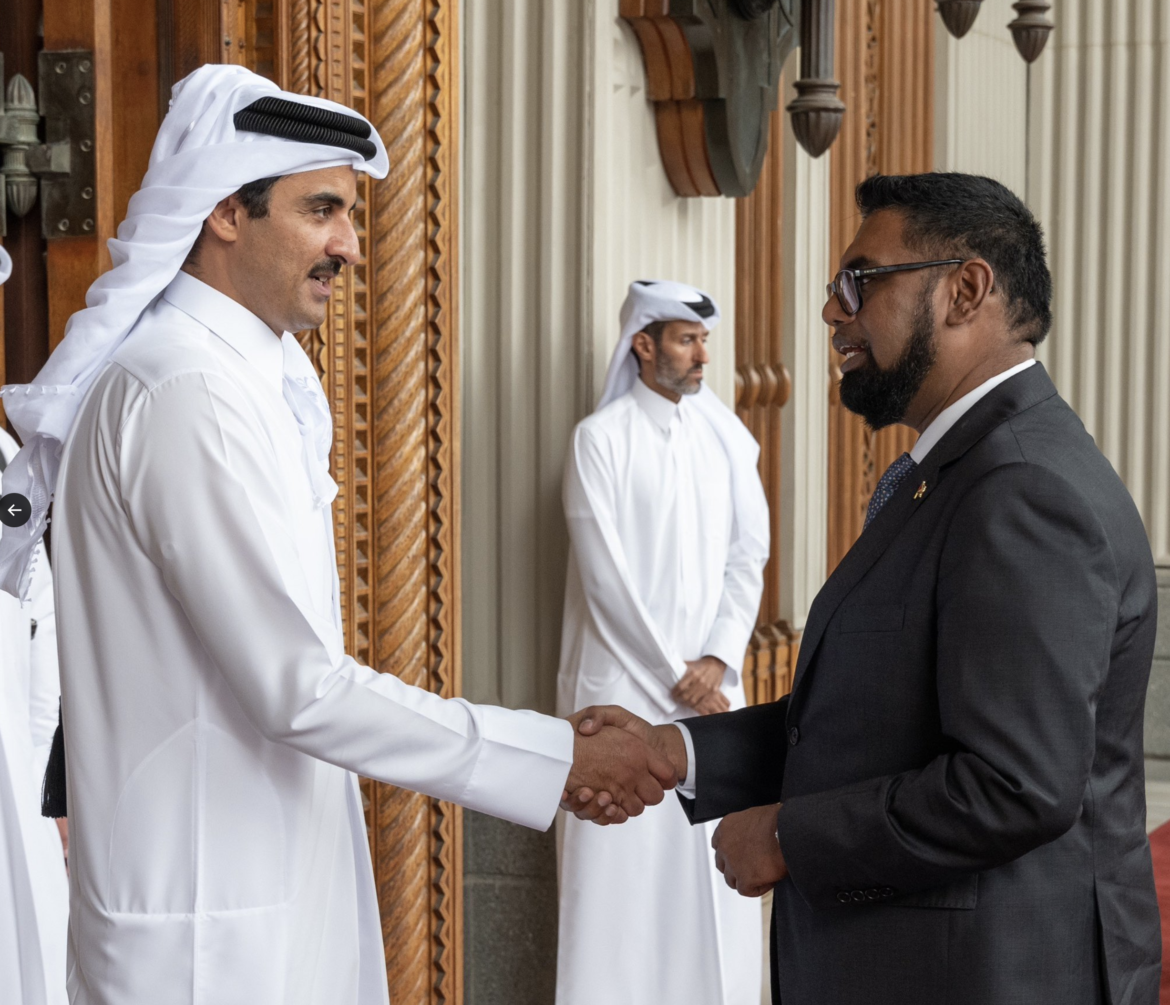
Mindful of the need to avoid putting all security asset eggs in one acquisition basket, following a visit to India in January this year, President Mohamed Irfaan Ali expressed interest in purchasing two Hindustan Aeronautics Limited, HAL Dornier 228 for the GDF Air Corps, which has a serious aircraft deficit. The two 19-seater Short Takeoff and Landing (STOL) planes will be used to ferry troops and supplies to military bases across Guyana, assist maritime patrols, and transport VIPs.
The security investment from India is part of a broader strategic partnership between the two countries, in the areas of oil and gas, food security, and technology. One hopes that the diversification of security assets soon would be extended to Brazil, an established arms manufacturer with a wide portfolio, with which Guyana once had a strong relationship and remains a key actor in the geopolitical relationship involving Venezuela, as well as a valued ally in the proposed tripartite energy security partnership that would include Suriname.
The security partnership with the United States continues to be strengthened, notably is the three-day visits by SOUTHCOM Commander Admiral Craig Faller in January 2021 and last August by his successor, General Laura Richardson, to meet with political, military, and civic leaders about enhancing security ties between the two nations. Guyana also hosted the SOUTHCOM-sponsored Tradewinds 2021, a training exercise with ground, air, sea, and cyber aspects that brings together forces from the United States and Caribbean and other nations.
Noteworthy, too, Guyana has joined the Barbados-based Regional Security System (RSS). In March 2022 President Ali signed the RSS protocol while in Belize for a meeting of CARICOM leaders, and the following September Guyana formally became the eighth member when President Ali signed the instrument acceding to the RSS Treaty, joining Antigua and Barbuda, Barbados, Dominica, Grenada, St. Kitts and Nevis, St. Lucia, and St. Vincent and the Grenadines in the alliance that dates to 1982, becoming the member with the largest army. Incidentally, both the GDF and the Guyana Police Force (GPF) will participate in the RSS, as is the case with the other RSS members that have both defense and police forces.
For all the commendable investment in assets and strengthening of strategic partnerships, a cautionary note is warranted. Guyana faces both traditional and non-traditional security threats, notably territorial claims by both Venezuela and Suriname in the traditional area, and narco-trafficking, crime and violence, illegal migration, and human trafficking in the non-traditional one. Thus, even with the recent and planned investments the country’s security establishment, it will still face serious capability limitations in terms of personnel, equipment, and training.
However, there may be a risk that leaders in Guyana either are under-appreciating the scope of the threats, over-estimating the extent to which the new assets will address the security deficits, or both. A danger in the offing makes this conclusion plausible. The danger is what military professionals call mission creep: the gradual or incremental expansion of an organization’s mission beyond its original focus or goals, which risks compromising its overall efficiency and operational success because of the lack of commensurate resources to accomplish the expanded mission.
Recent pronouncements at the army’s 2023 officers conference, held on February 9 last, portend such a danger. The Commander-in-Chief contended that in addition to meeting the nation’s security challenges the GDF should rise to the challenge and consider how it will address issues such as the food and energy crises not only in Guyana but in the region. He also touted the idea that the Air Corps could expand its mandate and conduct forest monitoring activities, arguing that “the monitoring of our forest is part of our defense challenge, because it is an important national asset, earning revenue.”
Moreover, the president advocated a role for the GDF in the development of emergency mapping services, noting “In every region, I am tired with the fire tender turning up and they don’t know where the drain is, they don’t know where the trenches are… Is there a cluster map? How do we develop a cluster map for every region, and then a cluster map for different communities?”
In sum, as the waiting game plays itself out, Guyana is making prudent and pragmatic investments in security assets. Nonetheless, the leaders there might do well to guard against mission creep, lest they compromise the ability of the army to deliver effectively on its core mission and undermine the confidence of citizens in both them and it.
______
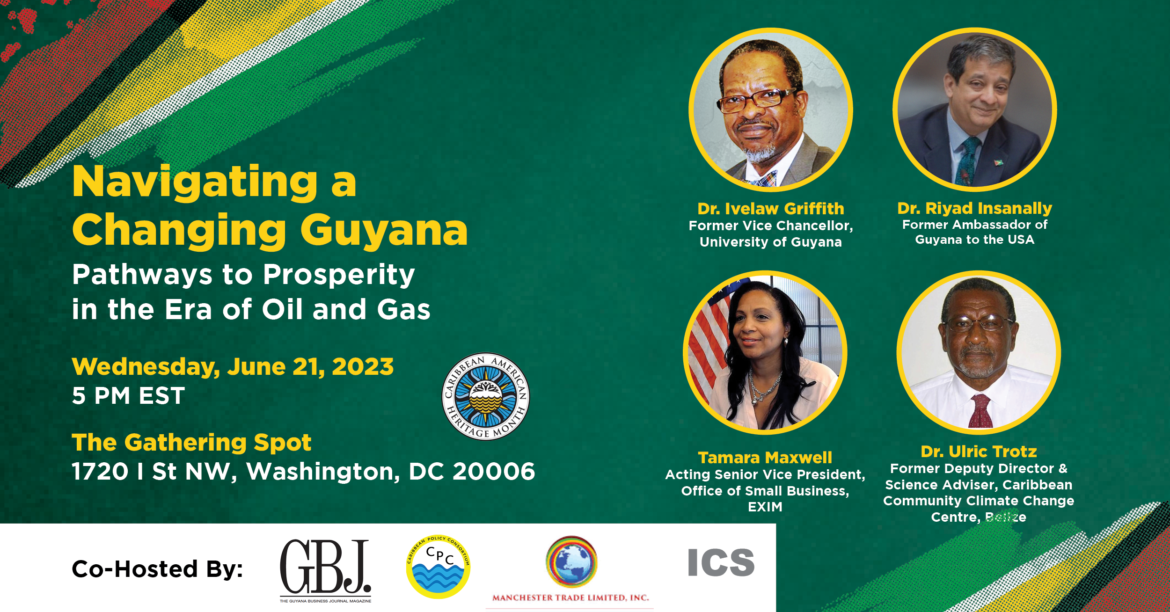
Ivelaw Lloyd Griffith, a former Vice Chancellor of the University of Guyana, is a Fellow with the Caribbean Policy Consortium and Global Americans. His next book, Challenged Sovereignty: The Impact of Drugs, Crime, Terrorism, and Cyber Threats in the Caribbean, will be published by the University of Illinois Press.
Guyana: Waiting for ICJ Decision, but also Investing in Security, Part 1
Guyana: Waiting for ICJ Decision, but also Investing in Security; Part 1
By
Ivelaw Lloyd Griffith
This is the first of a two-part series on the ongoing territorial-judicial saga between Guyana and Venezuela. Here we provide some recent developments on Guyana’s oil exploration and production landscape, which have increased the stakes for both nations. In Part II, we examine some of the security investments the government is making while the judicial drama plays out.
Waiting, but …
In a two-part series in OilNOW last fall I described the Guyana-Venezuela territorial drama as a waiting game, in that it evokes memories of the award-winning play Waiting for Godot by the famous Irish playwright Samuel Beckett. The waiting game began in 1962 when Venezuela first formally challenged the validity of the Paris Arbitral Award that had settled the dispute between the Bolivarian Republic and Great Britain over the colony then called British Guiana in 1899. The drama assumed new dimensions when, with green-lightening by the United Nations Secretary-General, Guyana took the matter to the International Court of Justice (ICJ) in 2018 after other resolution efforts pursued over several decades had failed.
In keeping with its rules, the Court needed to consider whether it had jurisdiction to hear the case. After deciding in December 2020 that it did, indeed, have the relevant jurisdiction, in March 2021 it gave Guyana until March 8, 2022, to submit its Memorial (case brief) and Venezuela until March 8, 2023, to present its Counter-Memorial. The expectation was that all things considered, a ruling on the substantive case would be made by March 2024.
However, the waiting game assumed new dimensions last June when Venezuela filed preliminary objections to the admissibility of Guyana’s petition. Under ICJ rules, the proceedings on the merits had to be suspended. Guyana was then given until October 7, 2022, to file a response to the objections and the Court held hearings on the preliminary objections from November 17 through November 22, last. The Court likely will render its judgment on Venezuela’s objections by the end of this coming April. So, the waiting game continues.
Waiting is not a strategy, though. As such, the government has been aggressively pursuing its national development goals, including extracting more of its newly found natural resource and investing some of the revenue derived from it. As Finance Minister Ashni Singh reported in his January 16, 2023, Budget Speech in the National Assembly, 2022 was an exploration banner year: 11 new wells were drilled, 10 of them being in the now famous Stabroek Block, which extends over 6.6 million acres (26,800 square kilometers) of maritime space. The new discoveries brought the total discoveries to 40, with 35 in Stabroek alone. Moreover, in December 2022, the authorities launched a new Licensing Round, which will run through this coming April.
Production continued apace, allowing for 102 lifts of crude oil, with revenues augmenting the sovereign wealth fund, called the National Resource Fund. Last year the Fund received just over US$1,099 million. After the transfer of US$607.6 to the government’s budget to fund various initiatives, the Fund had a 2022 end-of-year balance of US$1,271.8 million. The new year brought new bounty to the Land of Many Waters, with an additional discovery on January 23 in the Fangtooth SE-1 well, also in the Stabroek Block.
Towards 1 million barrels per day
Also noteworthy is that the Payara project is expected to begin production later this year, yielding some 220,000 barrels per day, and another project, named Yellowtail, is expected to come on stream in 2025 and produce about 250,000 barrels of crude per day. This should be followed by the Uaru project, which is anticipated to produce another 250,000 barrels per day following start-up in 2027. As a result, the country is set to produce about one million barrels per day before the sun sets on the current decade.
Although Venezuela’s energy profile dwarfs that of Guyana, South America’s sole English-speaking republic now boasts having proven more than 11 billion barrels equivalent of recoverable oil and gas. In all likelihood, this figure will increase as exploration continues to reveal the existence of more black gold. Consequently, Guyana is well positioned to reap enormous wealth, which would enable the nation to be propelled into a development stratosphere not contemplated a few years ago. Indeed, last year the non-oil real GDP growth was pegged at 11.5 percent and the overall economy was estimated to grow by some 62 percent, making Guyana’s economy the fastest-growing one in the world.
There is, therefore, confidence in robust economic growth and long-term revenues from oil. Last month the finance minister assured parliament that “there will be 136 lifts of profit oil from the Stabroek Block in 2023. Within this, Government is projected to have 17 lifts of profit oil from the producing FPSOs (Floating Production, Storage and Offloading vessels), earning an estimated US$1,406.6 million in profit oil and US$225.2 million in royalties in 2023.”
Thus, the waiting game continues. But Guyana’s leaders do not have the luxury to simply wait on the ICJ decision; they have the obligation to attend contentiously to the welfare of the nation, which includes addressing matters crucial to its national interest, a key aspect of which pertains to its territorial integrity. In this respect, in a May 2021 OilNOW opinion, I argued that pragmatism necessitated the pursuit of complementary imperatives – things that need to be actioned, not just spoken about. For me—then and now—three key imperatives pertain to public education, diplomacy, and investing in security assets. Commentaries on the first two are reserved for another time, but the third imperative—investment in security—will be the subject of attention in Part II.
______
Ivelaw Lloyd Griffith, a former Vice Chancellor of the University of Guyana, is a Fellow of the Caribbean Policy Consortium and Global Americans. His next book, Challenged Sovereignty: The Impact of Drugs, Crime, Terrorism, and Cyber Threats in the Caribbean, will be published by the University of Illinois Press.
Agriculture and the Oil and Gas economy
By
Utamu Belle & Dr. Terrence Blackman
The ninth installment of the Guyana Business Journal (GBJ) and Caribbean Policy Consortium (CPC) webinar series, “Transforming Guyana,” focused on “Guyana’s Agricultural Sector and the Oil and Gas Economy.”
Farming and energy production are seemingly disparate industries, yet they have a bond. Agriculture necessitates utilizing energy resources, like fossil fuels, and producing fertilizers and pesticides. The extraction, transportation, and utilization of fossil fuels can positively and negatively affect agriculture. Because of this interplay, this episode considered the agricultural sector in Guyana and its essential role in Guyana’s emerging Oil and Gas economy.
In his opening remarks, Dr. Lewis reflected on his first visit to the country in 1982, when there was a discussion of the potential for Guyana to become a major food producer in the Caribbean. He pointed out that this transformation did not materialize due to investment needs, technology, infrastructure, and other resource limitations. He defined the present task as leveraging these linkages to contribute to Guyana’s growth and development. He observed, “Because Guyana, regardless of how big and how dominant the oil and gas sector is going to become, beyond the numbers and the statistics, what’s going to happen is the rest of the economy needs to continue to live, and we need to find ways to get that to leverage.”
Dr. Chesney, a leading agricultural professional in the Caribbean who was awarded the Golden Arrowhead of Achievement for his contributions to agricultural development in Guyana and the Caribbean, emphasized that one must understand Guyana’s agrarian sector through its critical link to regional agriculture and food security. Dr. Chesney stressed that Guyana has fully embraced this idea. He noted that in 2020, the nation had taken the initiative of Caricom in agriculture and had been fundamental in accelerating the process, referring to the various farming projects carried out by the present government. Dr. Chesney emphasized that agriculture is not simply providing food and producing primary commodities. Instead, he stated that it is essential for the region’s sustainable progress. Within this context, Dr. Chesney noted that the oil and gas sector provides the opportunity for increasing agricultural activities: “With the proposed refinery and gas-to-shore project, we can produce inputs, whether it be fertilizers, pesticides, et cetera, and better processing capacity because of the cheaper electricity that would be provided.”
He noted that this is a chance to evolve and modify Guyana’s agricultural industry, encouraging individuals to view it as an enterprise rather than an exclusively labor-intensive pursuit. He believes involving traditional farm product exporters would help provide a steady market with fair prices and benefit the region’s overall agricultural sustainability.
Dr. Chesney also called for eliminating current obstacles to regional trading, such as inadequate transportation infrastructure, preventing this sector from being more active. Additionally, Dr. Chesney mentioned that non-tariff limitations, such as food safety standards, financing, communication, and geospatial diversification, must be addressed.
Joel Bhagwandin, a professional in the business and finance industries who has worked for over 15 years in the financial sector, reported that Guyana is progressing toward its aim of being developed by 2025. He stated that if one looks at the agricultural GDP growth of the previous ten years, the nation achieved the most significant growth in 2022 at 12 percent, its highest since 2013.
Bhagwandin remarked that the budget for 2020 to 2023 had grown by 65 percent, taking it to a total of GY$15 billion dollars from GY$9.4 billion dollars. He also highlighted that the agricultural sector makes up 25% of the non-oil GDP. He then explained that the government invested in the industry to increase food production and improve regional food security. However, this should be looked at in context with the other sectors. To further this goal, Bhagwandin asserted that infrastructure investments and energy projects were essential for creating value-added products and decreasing energy costs.
When posed a query by a viewer regarding an opinion piece that declared the Dutch disease was “damaging Guyana’s agricultural industry,” The Dutch disease is an economic term for the negative consequences that can arise from a spike in the value of a nation’s currency. It is primarily associated with the discovery or exploitation of a valuable natural resource and the unexpected repercussions that such a discovery can have on the overall economy of a nation. Bhagwandin denied this was accurate. He highlighted that if the exchange rate were to surge, it would cause agricultural exports to decrease since they would become more expensive, and he noted that this is not occurring. He said that while the government is creating a healthy atmosphere for farming, he believed that Guyana’s corporate sector needed to be more creative to take advantage of the opportunities in the agricultural industry.
Dr. Chesney commented that when agriculture is affiliated with the Caribbean Single Market and Economy (CSME), the migration of skills becomes crucial. He emphasized that “there is a lack of expertise, not necessarily a lack of labor, in addition to a lack of organization. Some of us are collaborating with universities to investigate how their curriculums can be improved to meet the demands of the intersection of the Region’s agricultural and oil and gas sectors. You must start putting in place that training capacity, enhancing the human capacity of the region to be able to provide the skills that are required.” He also pointed out that it would be unfair to suggest Guyana will experience the resource curse, the significant social, economic, and political challenges unique to countries rich in oil, gas, and minerals due to the relatively well-managed oil and gas industry.
In response to a question posed on efforts being made by the government to give investors confidence to enter the market, Bhagwandin said he is unaware of institutional barriers from a governmental perspective to enter the agricultural sector. He noted, however, that some bureaucracy is related to processes such as approvals, processing of licenses, etcetera. He said the government is investing in improving the overall public service delivery.
As highlighted in this month’s episode of Transforming Guyana, there are many ways in which Guyana’s agricultural and oil and gas sectors can leverage each other to contribute to and drive economic growth. Dr. Chesney predicts that the country will see steady growth in this sector in the coming years, with investment in infrastructure, training, international trade agreements, and business-to-business relationships, and he has cautioned us to manage this growth in the best possible way to ensure optimal outcomes for Guyana and the Guyanese people.

Utamu Belle
Utamu Belle is an award-winning Guyanese journalist with a career spanning over a decade. Her experience includes writing for print, television, and online media. In addition, she has worked as a Radio and Television host. She is the Founder of A-to-Z Media (Guyana), a News and Digital Editor with Upscale Magazine, and a Digital Coordinator/News Editor with The Guyana Business Journal and Magazine.
Dr. Terrence Richard Blackman is a member of the Guyanese diaspora. He is an associate professor of mathematics and a founding member of the Undergraduate Program in Mathematics at Medgar Evers College. In addition, he is a former Dr. Martin Luther King Jr. Visiting Professor at MIT and a member of The School of Mathematics at The Institute for Advanced Study. He previously served as Chair of the Mathematics Department and Dean of the School of Science, Health, and Technology at Medgar Evers College, where he has worked for more than twenty-five years. He graduated from Queen’s College, Guyana, Brooklyn College, CUNY, and the City University of New York Graduate School.
Media Advisory: Transforming Guyana, Episode VIII: Investment Security in Guyana
Production of the Guyana Business Journal & Caribbean Policy Consortium.

January 17, 2023
MEDIA ADVISORY: Transforming Guyana, Episode VIII: Investment Security in Guyana
Speakers:
- Terrence Blackman: Founder, Guyana Business Journal
- David E. Lewis: VP, Manchester Trade Ltd. Inc. & Fellow, Co-Chair, Caribbean Policy Consortium
- Komal Samaroo: Executive Chairman of Demerara Distillers Limited
- Patricia Francis: Chairperson of Trade Facilitation Task Force & fmr Executive Director ITC, fmr President JAMPRO
- Scott MacDonald: Caribbean Policy Consortium, and chief economist at Smith’s Research & Gradings
- Andrew Schnitzer da Silva: CCO, Ascending Ltd., Workforce, Marine, Technical Training and Procurement
Key Quotes
- Scott MacDonald:
- “While a lot of other countries are struggling, Guyana is moving in the right direction. Guyana is transforming and transformation is not an easy process.”
- “Guyana is definitely on the map for foreign investment, it is attracting it within Latin America and we’re talking about a country with less than a million people. Guyana came in seventh in 2021 in terms of foreign investment. For a small country on the shoulder of South America, Guyana in many regards is punching above its weight.”
- “It’s key to have awareness of what’s going on in the global economy, where you are, and in other words to put it mildly don’t get cocky Guyana. You’ve had a lot of success, you’ve moved ahead, you’re transforming the economy, you’re getting a socio-economic facelift but don’t get cocky about it because we live in a very competitive world.”
- “As we’re doing the great energy shift globally, it’s critical Guyana moves to develop non-fossil fuels sectors, that goes from small medium-sized enterprises, offshore office centers, BPOs, the whole range of industry; but there’s no reason why Guyanese companies can’t issue forth from Guyana.”
- “There’s a shopping list that goes with the vision thing for Guyana, that is the policy mix of improving education, development of human capital is critical, diversification from non-oil sectors, promotion of foreign direct invest but also promotion of local investment. We want to see a more competitive private sector in Guyana and I think that’s very critical.”
- “Guyana’s transformation is definitely in motion, it has critical momentum, but the trick going forward is how do you keep the momentum, how do you keep those reforms going and how do you main the consensus in Guyanese society that this is the vision of where we want to go. I think the prospects are very good for Guyana, but there’s a lot of challenges that sit here.”
- Andrew Schnitzer da Silva:
- “What I see happening in Guyana is in a way much different from what I saw happening in the beginning of the century in Angola and what I am experiencing right in Mozambique, there is willingness to transform and to create better ways to attract investors, but at the same time I feel that on the ground there is still a lack of understanding of the huge impact that this discovery can entail. There is still not a clear understanding of all the requirements and of all the efforts that need to be made in order to attract foreign investment.”
- “There is some sense of fear that maybe the foreign investors are going to keep the whole ‘gold’ in the gold rush, so there is also still some weariness into how to accept and to how to collaborate with foreign investors coming. It is difficult to penetrate and I think that happens naturally.”
- “Guyana does have a small population, does have a huge task ahead of itself and it could profit a lot from creating collaborative ways of investing in developing its infrastructure, in developing its resources, and in looking at digging up the ‘gold’ a lot quick than it will be able to do by wanting to do it by itself.”
- David E. Lewis:
- “So there’s that risk and that danger that all this focus on the oil and gas crowds out the reality of the need to do the basic day-to-day homework of modernizing the economy, streamlining bureaucratic and regulatory procedures, and really get beyond and overcome still what I would call ‘hangover’ of the 60s and 70s and that state-controlled period. The view that there’s nothing good about what has been the experience of Guyana with foreign investors. I think you know that is still a work in progress and to the degree that we can begin to focus more on some of these new success stories beyond oil and gas.”
- Komal Samaroo:
- “Because we did not have a competitive environment, local production became a challenge, we could not compete against imports coming in, the cost of power, the shortage of skills, the lack of capital. I believe that with the situation where power cost is going to come down, infrastructure is being put in place and where there is more availability of capital, I think companies are looking to invest in areas that result in products that previously were imported can be available locally.”
- Patricia Francis:
- “Certainly with respect to the regional artists, I think this is probably one of the most important of this opportunity of Guyana. I think Guyana’s very small population cannot actually grow in this on a global basis unless they somehow integrate into the region, and by that I don’t only mean CARICOM I also mean South America because as things begin to transform and move there is going to be need for the industry to come out and [speak] about can it live on 800,000 people or does it need to expand into other markets.”
- “Any of the industries that you’re talking about […] the infrastructure to support those and the kind of ecosystem on which you build those industries is going to be critical and important, so once you start talking about producing for a global market you’ve got to think about how [you’re] going to move those goods or how you’re going to move those goods by sea or by air.”
- “I think also again the local content act recognizes this to a large extent, but I think the government has certainty that this is going to be a moving target as they build capacity, both huge physical and also institutional in order to support industries as they move forward.”
Terrence Blackman, Ph.D., Founder & CEO Guyana Business Journal terrence.blackman@guyanabusinessjournal.com
Dr. David E. Lewis, Fellow and Co-Chair, Caribbean Policy Consortium DavidLewis@ManchesterTrade.com
Commentary, On the Opportunities, success, and vulnerability of the Diaspora

The Caribbean diaspora, particularly in the United States, has been successful and accomplished in their adopted home. However, one must not lose sight of the fact that, like their Proximate group, i.e., other “people of color,” they have been labeled among the personae non-grata by those who fear the browning of America. Moreover, their racial/ethnic hue and immigrant status are also targets of a paranoiac “cancel culture” and “replacement theory” syndrome. Such phenomena likely charged the recent mass shooting in Buffalo, New York. It was reported that one of the victims of that shooting is of Guyanese heritage.
According to one expert, the perpetrator of the Buffalo shooting had “pent-up frustrations” triggered by the aforementioned sinister ideology. Mental illness may be an underlying contributing factor, but those who attempt to explain away the brutal, racist acts tend to use this human malady to justify such viciousness. Most people with mental health problems are not violent. Apart from access to dangerous weapons, “mass shootings” are more likely to be ignited by spurious indoctrination, hatred, and prejudice. Some perpetrators are influenced by the rhetoric of “extremists” whose ideology creates a culture of hate, preying upon isolated, disaffected youth. This situation is a hidden dimension of tension and potential endangerment of people in the diaspora.
In this light, it is essential that “immigrants of color,” like other segments of the population, (1) are aware of the safety and security of their social spaces and (2) develop a critical consciousness about the history and socio-political realities of their adopted home (3) note that within any single culture/society, people have different values (4) should embrace authenticated truths, self-respect and respect for others. However, it must be understood that the general public has the right to protection under the law. Civility, human rights, and inclusion should be reflected in what is taught across racial, political, and ethnic groups, regardless of citizenship or immigration status. The intended audience of this commentary – civil society and leadership – is challenged to think carefully about the undergirding reality of ethnic relations and international and political tensions. To deal with them constructively, sometimes it is necessary to figuratively “go to a place” that feels uncomfortable and has difficult conversations. Understanding the experience, influences, trauma, and pain of a group with whom one shares a common space is therapeutic and educational.