
Sunday Essay · Diaspora Engagement
A letter to Guyana at sixty, written on the road to Boston, reflecting on the nation’s founding promises and current challenges.
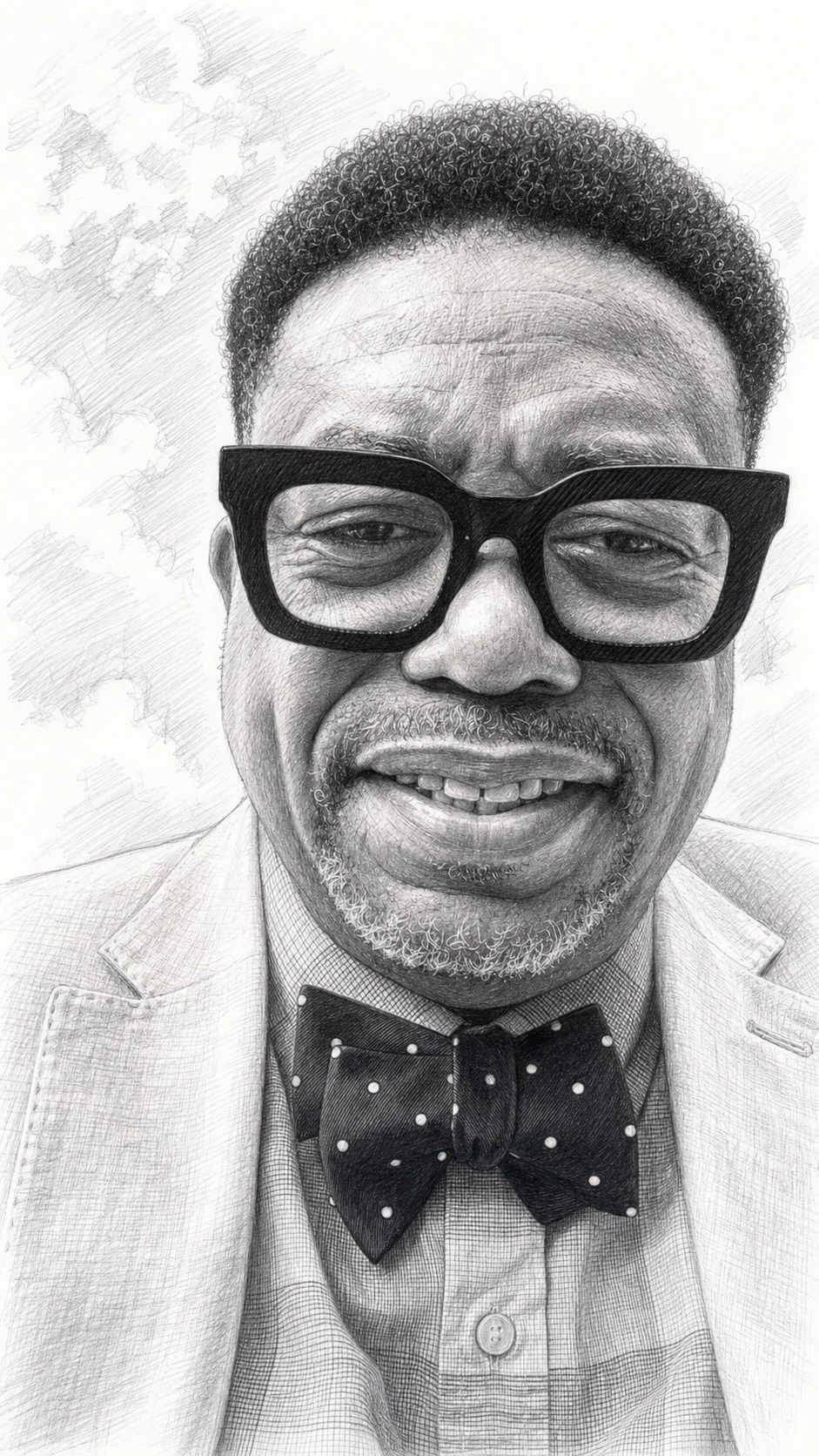
By Terrence Richard Blackman, Ph.D. · May 22, 2026
Dear Guyana,
I am driving to Boston tonight.
That sentence carries more weight than it appears to. Boston is not simply a city I visit. It is the city where my professional life was made — the city that, on two distinct occasions separated by years and altitude, handed me something essential and irreversible.
The first time, I was a doctoral student completing my dissertation as a summer faculty fellow at Boston University. I remember what it felt like to have the institutional resources of a research university placed in service of the argument I was making in number theory — the library, the seminars, the particular silence of a summer campus when everyone who is there has chosen to be there because the work demanded it. That summer, I finished. I became Dr. Blackman. Boston gave me that.
The second time, I crossed the Charles River to Cambridge, to the Department of Mathematics at MIT, as the Dr. Martin Luther King Jr. Visiting Assistant Professor. If the BU fellowship was the crucible, MIT was the confirmation — not of my ability, which the mathematics had already settled, but of the argument I had been building since Queen’s College, Georgetown, since Brooklyn College, since the CUNY Graduate Center: that a Guyanese boy moving through those rooms was not an anomaly to be explained but an existence proof to be replicated.
I have loved this city ever since. I love it the way you love a place that changed not just what you knew but what you believed was possible.
And so tonight, driving north through the darkness contemplating the impending sixtieth anniversary of your independence, Guyana, the road is doing what roads do when you give them enough miles — it is assembling connections that the desk would not have found.

1849
Year ‘separate but equal’ doctrine was constructed in Boston, 14 years after emancipation in Guyana.
115 years
Time between the argument for equality in education and its vindication by the Supreme Court.
1966
Year Guyana gained independence, promising free education from nursery to university.
$2.2 billion
Amount of research funds Harvard faced freezing due to a directive against DEI programs.
I. The City That Contradicts Itself
Boston is a paradox that has never ceased to instruct me. It is a cradle of liberty — and it is, in real and documentable ways, a city of intellectual and moral courage. MIT and Boston University alone have reshaped what humanity knows about itself. But Boston is also the city that gave the world one of the most consequential legal doctrines in the history of race and schooling. It did so in 1849 — fourteen years after emancipation had already arrived in our, Guyana, fourteen years after enslaved Africans on the Demerara, Essequibo, and Berbice coasts had been told, by force of the British Abolition Act of 1834, that they were nominally free.
The legal architecture of “separate but equal” was being constructed in Boston at the precise moment Guyanese apprentices were completing the transition out of bondage and asking the same question Sarah Roberts’ father was asking on the other side of the Atlantic: what, exactly, does freedom mean if the institutions of the society remain closed to my child?
In 1848, Queens College, Georgetown, Guyana was founded on August 5, 1844, a five-year-old girl named Sarah Roberts walked past five white schools on her way to the lone Black school in Boston. Her father tried to enroll her in a white school four times. Each time, the General School Committee refused — simply because Sarah was Black. Benjamin Roberts sued. He turned to attorney Robert Morris, one of the first African American men admitted to the bar in Massachusetts, who then sought a young Charles Sumner as co-counsel.
Sumner made a long and impassioned argument before the state’s Supreme Court — that segregation was not only illegal, but wrong. The Massachusetts Constitution and Massachusetts case law, he declared, both required the equal treatment of all citizens. He pressed further: the separate school could never be equal. Not because of its budget. Because of its message. Every child who entered it received, before the teacher opened her mouth, a lesson in her own diminishment. The separation itself was the injury.
He lost. Chief Justice Lemuel Shaw held that racial prejudice “is not created by law, and probably cannot be changed by law.”
I think about that ruling every time I enter Massachusetts. The campus where I completed my dissertation sits perhaps five miles from the courthouse where Lemuel Shaw told Benjamin Roberts that the law could not remedy what it had not made. Five miles. One hundred and fifty years. The distance between those two coordinates is the entire history of civil rights.
In 1896, the United States Supreme Court cited Roberts v. Boston as direct precedent to uphold the “separate but equal” doctrine in Plessy v. Ferguson. One courtroom, one capitulation to the existing order — and the cage was exported across an entire nation for another half century.
But Sumner did not stop at the courthouse steps.
GBJ Data Note: In 1849, the ‘separate but equal’ doctrine was constructed in Boston, 14 years after emancipation had already arrived in Guyana.
The separation itself was the injury.
II. The Senator Who Would Not Yield
Sumner went to Washington. He became a United States Senator from Massachusetts — the same seat from which he was nearly beaten to death on the Senate floor by a congressman defending slavery, an assault so vicious he could not return to his duties for years. The Senate left his empty desk unfilled as a rebuke to his attackers. When he returned, he returned still arguing.
In 1870, he introduced legislation seeking to end discrimination and segregation in public facilities, establishments, and conveyances — affirming in its preamble the equality and justice stipulated in the Declaration of Independence. He fought for that bill for four years. He died fighting for it. His last words, reportedly, were a plea to colleagues not to abandon the civil rights bill.
A month after his death, in deference to their fallen colleague, the Senate Judiciary Committee approved the bill. The Senate passed it. The House concurred. President Grant signed it into law in March 1875. But the bill as passed was a mere shadow of Sumner’s vision. In particular, it ignored the issue of segregation in public schools. Eight years later, the Supreme Court struck down even that limited achievement. Eighty-two years would pass before Congress approved another civil rights bill.
Eighty-two years.
And yet — the arguments Morris and Sumner had made in Roberts v. Boston echoed through Brown v. Board of Education more than a hundred years later, when Thurgood Marshall stood before the Supreme Court and completed what the Boston courtroom had refused to begin. The claim that separate is inherently unequal — dismissed in 1849 — became the law of the land in 1954. And in 1964, Congress passed a civil rights law in the spirit of Sumner’s Act of 1875, prohibiting discrimination in places of public accommodation.
One hundred and fifteen years between the argument and its vindication. That is the length of the arc.
I am driving through it tonight, in the dark, toward the city where a Guyanese mathematician from Brooklyn finished his dissertation one summer and returned, years later, to stand inside MIT and make the argument with his presence that no theorem can make alone.
GBJ Data Note: It took 115 years between the initial argument for equality in education in *Roberts v. Boston* and its vindication by the Supreme Court in *Brown v. Board of Education*.
One hundred and fifteen years between the argument and its vindication. That is the length of the arc.
III. What Guyana Promised at Midnight
You were born, Guyana, in the same decade that arc was finally bending — 1966, two years after the Civil Rights Act, in the historical moment when the democratic world was completing, however fitfully, the argument that equal citizenship is not a privilege to be extended by the powerful but a right to be claimed by the governed.
On May 26, 1966, Jagan and Burnham embraced as Guyana laid what was called the indigenous foundation of inclusivity, equality, and equity — aspiring to be “One People, One Nation, One Destiny.” That was not rhetoric. It was a constitutional promise. And among the most concrete expressions of it, free education from nursery to university became a right enshrined in the Constitution of Guyana — with food feeding programmes, free textbooks, exercise books, and later free uniforms, ensuring that hunger would not be a deterrent to participation in learning.
A policy of free education from kindergarten to university expanded considerably the Guyanese middle class and significantly narrowed the inequality gap between the classes.
That was Sumner’s argument, translated into postcolonial Guyanese governance. The school is the instrument by which a nation either redeems or betrays its founding promise. Access to the school is not a social service. It is a civil right. And the quality of the school — not merely its existence — is the measure of whether the right is real or merely declared.
This is where I must press you, Guyana, on your Diamond Jubilee, with the love of a man who carries your formation in his bones if not his passport.
GBJ Data Note: In 1966, Guyana enshrined free education from nursery to university in its Constitution, accompanied by programs like free textbooks and uniforms.
The school is the instrument by which a nation either redeems or betrays its founding promise.
IV. The Walk That Has Not Ended
Sarah Roberts walked past five white schools to reach the one she was permitted to attend. Today in Guyana, a child in Region Eight or Region Nine walks — metaphorically, and sometimes literally — past the promise of oil wealth to reach a school that the state has not yet made worthy of a child’s full potential.
A 2024 UNDP report characterizes the state of Guyanese education as a systemic failure: the average student still departs the school system midway through Grade Nine — not merely because of academic struggle, but pushed out by overcrowding, violence, and underqualified teaching staff. This is no longer a poverty problem in the old sense. Guyana is now an oil-producing state with revenues swelling the treasury at a pace unimaginable a decade ago — yet in hinterland regions, Amerindian communities still face chronic underdevelopment, with limited access to electricity, internet, clean water, and paved roads, while oil-driven inflation makes basic necessities increasingly unaffordable even on the coast.
The major barriers to education in Guyana remain socioeconomic disparities, colonial traditions, and insufficient infrastructure — compounded within hinterland communities by inadequate internet services and an inadequate number of suitably qualified educators.
This is separate and unequal without the formal statute. The separation is accomplished by geography, by history, by the accumulated weight of a political culture that has too often treated education as an instrument of ethnic mobilization rather than as a national covenant. Chief Justice Shaw said law cannot change what law did not create. The Guyanese version of that capitulation sounds like this: it is the terrain; it is the ethnic arithmetic; what can a government do? The answer — the only honest one, the one Sumner gave his life making — is: everything the oil revenue now makes possible, if the will is equal to the wealth.
GBJ Data Note: A 2024 UNDP report indicates the average Guyanese student departs the school system midway through Grade Nine due to systemic issues like overcrowding and underqualified staff.
This is separate and unequal without the formal statute.
V. The Counter-Revolution Traveling North
But I must be honest with you, Guyana, about something the Diamond Jubilee speeches will not say: the arc does not only bend forward. It can be bent back. And at this precise moment in history, the most powerful government in the world is bending it backward with institutional force and ideological intent.
The Trump administration has prosecuted what can only be described as a systematic assault on the architecture of educational equity in the United States — the very architecture that Sumner spent his life building and that the Civil Rights Act of 1964 finally secured. In February 2025, the Department of Education issued a directive threatening to strip federal funding from any school that maintained diversity, equity, and inclusion programs, declaring them violations of civil rights law — inverting, with stunning audacity, the very language of civil rights to dismantle civil rights. Billions of dollars in federal grants were frozen or canceled at universities across the country. Harvard alone faced the freezing of $2.2 billion in research funds. Columbia capitulated, surrendering its academic governance under financial duress.
The administration declared that programs showing preference to minority groups were themselves discriminatory — that the remedy for centuries of exclusion was exclusion from the remedy. This is not a novel argument. It is Chief Justice Lemuel Shaw’s argument, dressed in the language of colorblindness. Shaw said racial prejudice cannot be changed by law. The Trump administration says correcting for racial prejudice by law is itself prejudice. The logic is different. The destination is the same.
I do not raise this as an abstraction. I raise it as a matter of institutional survival for the college I serve. Medgar Evers College — a Predominantly Black Institution in Brooklyn, named for a murdered civil rights leader, built to serve students whom every elite institution in America had organized itself not to find — had its U-RISE grants canceled by the NIH in 2025. Programs that supported student research, stipends, mentorship, and the biomedical pipeline from Bedford-Stuyvesant to graduate school — severed. CUNY as a system lost over four million dollars in training grants alone. The administration’s rationale: these programs fail to “align with agency priorities.”
Let us be precise about what those priorities are. They are the priorities of a government that looked at the pipeline Sumner built — that Brown confirmed, that the Civil Rights Acts constructed, that institutions like MEC embodied — and decided the pipeline itself was the problem. This is not fiscal conservatism. It is civilizational regression dressed in the language of merit.
The NSF canceled hundreds of grants not aligned with “program goals or agency priorities” — including research on environmental justice and diversity in STEM. The administration proposed abolishing the Department of Education entirely. It stripped $350 million from Minority-Serving Institutions — the HSIs, the PBIs, the institutions that serve, in aggregate, millions of Black, Hispanic, Asian, and Native American students who cannot afford and do not live near an HBCU. The rationale was that grants tied to minority enrollment thresholds constitute racial discrimination. By this logic, the Civil Rights Act of 1875 — Sumner’s own bill — was also unconstitutional. By this logic, the arc should never have bent at all.
GBJ Data Note: Harvard faced the freezing of $2.2 billion in research funds due to a directive against diversity, equity, and inclusion programs.
The arc does not only bend forward. It can be bent back.
I am driving to Boston tonight through a country that is having, again, the argument it has never fully resolved: whether the founding promise of equality is a commitment to be honored or a rhetoric to be deployed selectively by whoever holds power. Shaw made his choice in 1849. The current administration has made its choice in 2025. The question, as always, is what the organized moral imagination of the people will do in response.
VI. The Test the Diamond Sets
I think of the two Bostons that made me. The first was a summer of solitude and discipline at Boston University — a doctoral student from Brooklyn, from Georgetown, from Queen’s College, bending over number theory until the argument became a dissertation, and the dissertation became a degree, and the degree became the foundation of everything that followed. The second was MIT — the confirmation, years later, that the journey from QC to Brooklyn College to the CUNY Graduate Center to BU to Cambridge was not an accident of biography but a proof of concept: that minds formed in the margins of the academy’s attention are not lesser minds. They are minds that the academy has not yet been organized to find.
That is my MEC-to-MIT philosophy. That is what I mean by existence proof. And it is precisely what the current administration’s assault on minority-serving institutions is designed — whether by malice or indifference — to make impossible for the next generation.
Guyana, you are watching all of this from a vantage point that should sharpen your resolve rather than your envy. The United States is demonstrating, in real time, what happens when a society that built the legal infrastructure of equity decides to dismantle it — grant by grant, directive by directive, executive order by executive order. The lesson is not that equity infrastructure is fragile. It is that equity infrastructure, once dismantled, takes generations to rebuild. Sumner’s arc ran a hundred and fifteen years. The counter-arc, if it is not arrested, could run just as long.
Your own Education Strategic Plan acknowledges what Sumner argued: “there can be no meaningful achievement of the goal of improving performance at all levels if the disparities between sub-groups are not reduced.” You have made real investments. Free university education has been restored. The Guyana Digital School has been launched. One billion Guyanese dollars has been invested in textbooks for hinterland regions. These are not nothing.
But Sumner’s Act was struck down because it was not grounded deeply enough to survive the withdrawal of political will. Investment without institutional transformation is expenditure without architecture. The warning the American moment carries for Guyana is this: build your educational institutions with enough depth, enough distributed ownership, enough constitutional grounding, that no single government — not the next one, not the one after — can dismantle them with a directive and a funding freeze. What is given by executive generosity can be taken by executive caprice. What is built into the constitutional fabric of a nation, into its professional culture, into the lived expectation of its citizens, requires a counter-revolution to undo. And counter-revolutions, as the United States is currently demonstrating, are not impossible.
Build accordingly.
VII. What the Road Asks
The headlights catch the road and I think of the children I have taught — at MEC, students who arrived doubting that calculus was made for people like them, and left knowing it was made by people like them. I think of Sasha at the Boston Conservatory at Berklee, pursuing the excellence this city nurtures in those it admits. I think of Madiba in Albany, healing children whose ZIP codes will determine more about their health outcomes than their biology ever will. I think of my students — Uniqua, Rupert, Darrell, Essence — whose existence proofs are still being written, and whose federal research grants were canceled by an administration that called the pipeline that would have carried them forward “discriminatory.”
And I think of the child in Region Nine who deserves a mathematics teacher as committed to her future as the Boston University faculty fellowship was committed to mine. Who deserves the institutional investment that made it possible for a Georgetown boy to finish a dissertation in this city, to return to it as an MIT professor, and to drive toward it tonight as a man who knows — in his body, in his mathematics, in his love for a country still becoming what it promised — that the school is where the nation either keeps or breaks its word.
Sixty years, Guyana. The Diamond Jubilee is named for what endures under pressure. The question the anniversary puts before every Guyanese — in Georgetown, in the hinterland, in Brooklyn, in Toronto, in London — is whether this generation will be the one that finally closes the distance between the promise made at midnight on May 25, 1966, and the reality that every child who walks to school in this land deserves to find waiting.
Not a separate school. Not an unequal school. Not a school whose quality is a function of the ethnicity of its neighborhood or the remoteness of its terrain.
The equal school. The excellent school. The school that tells every child: you are ours, and we are yours, and this nation is not complete without you.
Sumner argued for a hundred and fifteen years before his arc reached its destination. You are sixty, Guyana. The arc in the north is being contested again. The road is long but it is lit, and the direction — if we are honest about what this moment demands — is not given to us. It is chosen.
That is what the Diamond owes the child.
Happy Independence, Guyana.
Be well.
Terrence Richard Blackman, Ph.D. is Professor and Chair of the Department of Mathematics at Medgar Evers College, City University of New York, and Founder and Publisher of the Guyana Business Journal. He completed his doctoral dissertation as a Summer Faculty Fellow at Boston University and served as Dr. Martin Luther King Jr. Visiting Assistant Professor in the Department of Mathematics at the Massachusetts Institute of Technology.
References
- British Abolition Act of 1834, 3 & 4 Will. 4 c. 73 (1833).
- *Roberts v. City of Boston*, 59 Mass. 198 (1849).
- See J. Clay Smith Jr., *Emancipation: The Making of the Black Lawyer, 1844-1944* (University of Pennsylvania Press, 1993).
- *Roberts v. City of Boston*, 59 Mass. 198, 206 (1849).
- *Plessy v. Ferguson*, 163 U.S. 537 (1896).
- See David Herbert Donald, *Charles Sumner and the Coming of the Civil War* (Alfred A. Knopf, 1960).
- See *Congressional Globe*, 34th Cong., 1st Sess. (1856).
- Civil Rights Act of 1870, S. 94, 41st Cong., 2nd Sess. (1870).
- See Moorfield Storey, *Charles Sumner* (Houghton, Mifflin and Company, 1900).
- Civil Rights Act of 1875, 18 Stat. 335.
- *Civil Rights Cases*, 109 U.S. 3 (1883).
- Civil Rights Act of 1964, Pub. L. 88-352, 78 Stat. 241.
- *Brown v. Board of Education*, 347 U.S. 483 (1954).
- *Brown v. Board of Education*, 347 U.S. 483 (1954).
- Civil Rights Act of 1964, Pub. L. 88-352, 78 Stat. 241.
- See Cheddi Jagan, *The West on Trial: My Fight for Guyana’s Freedom* (Seven Seas Publishers, 1966).
- Constitution of the Co-operative Republic of Guyana, Preamble.
- Constitution of the Co-operative Republic of Guyana, Article 27.
- Department of Education, Directive on Diversity, Equity, and Inclusion Programs (February 2025).
- Harvard University, Office of Financial Aid, Internal Memo (March 2025).
- Columbia University, Office of the Provost, Statement on Academic Governance (April 2025).
- See Myrlie Evers-Williams, *For Us, the Living* (University Press of Mississippi, 2009).
- National Institutes of Health, U-RISE Program Funding Announcement (FY2025).
- City University of New York, Office of Research and Sponsored Programs, Annual Report (FY2025).
- White House, Office of Management and Budget, Proposed Budget for Fiscal Year 2026.
- Department of Education, Office of Postsecondary Education, Minority-Serving Institutions Funding Report (FY2025).
Supported By
We are grateful for the partnership and support of individuals and organizations committed to advancing Guyanese and Caribbean development and human capital investment.
Metallica Commodities Corporation
For over two decades, Metallica Commodities Corporation has connected producers and consumers of non-ferrous metals across the Americas, Africa, and Asia. Headquartered in New York with offices in Peru, Canada, Tanzania, and Guyana, MCC brings institutional expertise and global reach to resource-rich markets, with a deep understanding that sound governance determines whether natural wealth generates broad-based prosperity.
The GBJ Sunday Essay is supported by MCC and is not written on its behalf. The views expressed are those of the author.
METALLICACC.COM ↗Pebble Stream™
Pebble Stream™ is a US-based cloud-computing company that transforms complex Excel models into secure, enterprise-scale cloud applications through patented “pebblization” technology. Founded by Bediako George and backed by over 25 years of financial and accounting expertise, the company processes one billion tax calculations monthly and counts a Big Four accounting firm among its clients. For Guyanese and Caribbean businesses, Pebble Stream offers the scalability a rapidly growing economy demands.
This GBJ article is sponsored by Pebble Stream™ and is not written on its behalf. The views expressed are those of the author.
PEBBLESTREAM.COM ↗Caribbean International Shipping Services
Ship with Confidence: Your Trusted Logistics Partner
For over 30 years, Caribbean International Shipping Services has been the trusted choice for businesses and individuals shipping from the Southeast USA to the Caribbean and Latin America. Specialising in household relocations, commercial goods, and online order consolidation, their experienced team delivers weekly ocean and air freight services to over 20 destinations — reliably and stress-free.
📞 770-322-3111
CARIBSHIPATL.COM ↗MCCGUSA
Management Consulting, Project Management, Real Estate
Founded in 1990, MCCGUSA (formerly Management Consulting and Controls Group) is a premier consulting and project management firm serving clients across the United States and internationally. A Certified MBE, DBE & Hub Zone Business, MCCGUSA provides management consulting, project management, financial advisory, and real estate services — with national affiliates and international representation in the Caribbean and Latin America.
📞 212-269-6126
MCCGUSA.COM ↗Individual Supporters
Courtney Allen | All Te Networks | Corine Locke | Tony Harris | Roderick Alsopp | Clarence Bone | Dr. Michelle Luard
🇬🇾 Please support the Guyana Business Journal & Magazine today

1 comment
WHAT THE DIAMOND OWES THE CHILD: THE TRUE TEST OF GUYANA’S INDEPENDENCE.
Dr. Terrence Blackman raises one of the most profound constitutional and moral questions facing Guyana at its Sixtieth Independence Anniversary:
What does a nation truly owe its people — especially its children?
His reflections correctly remind us that Independence was never meant to be merely the transfer of political power from Britain to local elites. Independence was supposed to create:
equal citizenship,
equal opportunity,
constitutional fairness,
educational advancement,
economic mobility,
and human dignity for all Guyanese people.
The promise of “One People, One Nation, One Destiny” was not simply ceremonial language. It represented a national covenant.
FREE EDUCATION WAS ONE OF GUYANA’S GREATEST CIVILIZATIONAL ACHIEVEMENTS.
Dr. Blackman correctly identifies free education as one of the most transformative achievements in Guyana’s post-independence development.
Through:
* free nursery to university education,
* school feeding programs,
* textbooks,
* exercise books,
* and later school uniforms,
* thousands of poor and working-class Guyanese families were able to produce:
* teachers,
* lawyers,
* doctors,
* engineers,
* diplomats,
* scholars,
* entrepreneurs,
* and professionals across the world.
That educational expansion helped build the Guyanese middle class and reduced structural inequality.
For many Guyanese families, education became the ladder out of poverty.
HOWEVER, EDUCATION ALONE IS NOT ENOUGH WITHOUT CONSTITUTIONAL EMPOWERMENT.
This is where the national discussion must now mature.
A nation may educate its people, but if the political structure remains excessively centralized, party-dominated, and constitutionally imbalanced, then the full creative and democratic potential of the people can still be restrained.
The central question therefore becomes:
Can a modern educated population fully flourish under a political structure rooted in:
party paramountcy,
winner-take-all governance,
centralized executive authority,
and weak parliamentary independence?
That is the deeper constitutional debate confronting Guyana today.
THE CHILD MUST INHERIT MORE THAN SYMBOLIC INDEPENDENCE.
The child of Guyana deserves:
quality education,
economic opportunity,
constitutional protection,
independent institutions,
transparent governance,
freedom of expression,
and meaningful democratic participation.
The child must inherit:
* a Parliament that functions independently,
* courts that remain strong,
* local communities with real authority,
* and a constitutional order where power is balanced — not concentrated.
Because when power excessively merges with the State, democracy weakens, institutions become vulnerable, and citizens gradually lose meaningful participation in governance.
THE NEXT SIXTY YEARS MUST BE ABOUT HUMAN DEVELOPMENT.
As Guyana becomes one of the fastest-growing oil economies in the world, the measure of success cannot merely be:
* GDP growth,
* oil production,
* highways,
* or skyscrapers.
The true measure of national development will be:
1. the condition of the schools,
2. the independence of institutions,
3. the empowerment of citizens,
4. the reduction of poverty,
5. the strength of constitutional governance,
6. and the expansion of human freedom.
GUYANA’S FUTURE MUST BELONG TO ITS PEOPLE.
Dr. Blackman’s letter is ultimately a reminder that Independence is not a destination.
It is an ongoing constitutional responsibility.
And the greatest tribute Guyana can pay to its Independence generation is not simply celebration — but the continued construction of:
* a just society,
* a democratic society,
* an educated society,
* and a constitutionally balanced society where every Guyanese child has a genuine opportunity to thrive.
That is what the diamond truly owes the child.
Bryan Benn
Comments are closed.