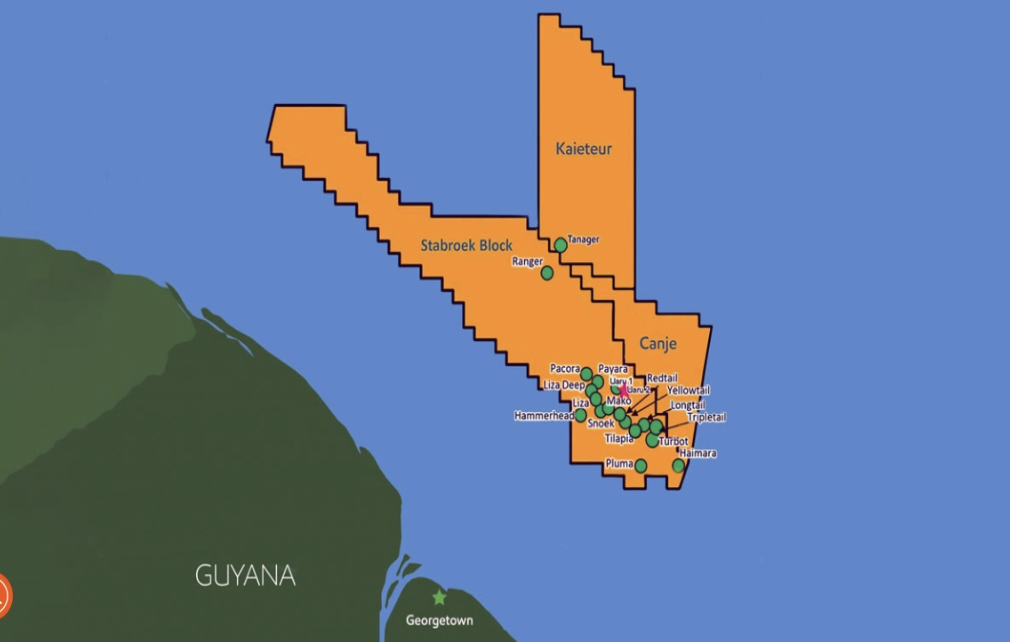
Hess Corporation has discovered a new oil reserve at the Lancetfish-1 well on the Stabroek Block in offshore Guyana. The well, located around 4 miles southeast of the Fangtooth discovery, was drilled by the Noble Don Taylor in 5,843 feet of water and found approximately 92 feet of oil-bearing sandstone reservoir. Additionally, Hess has disclosed that Kokwari-1 exploration well was drilled in the first quarter of the year but did not find commercial quantities of hydrocarbons. Hess has a 30% stake in the Stabroek Block, ExxonMobil is the operator with a 45% interest, and CNOOC holds a 25% stake. In 2023, ten wells are planned for the Stabroek Block.
Geopolitics
Guyana and India
A Relationship of Deepening Importance
Scott B. MacDonald
In January 2023, Guyana’s President Irfaan Ali visited India, meeting India’s Prime Minister Narendra Modi. The two leaders discussed a broad range of economic opportunities, but the major topic was oil. Guyana, which has emerged as the newest petro-state, has plenty of oil; India, one of the world’s largest economies, lacks oil. Indeed, India is one of the world’s largest importers of oil, ranking third behind China and the United States. The tempo of Guyanese-Indian relations have accelerated over the past two years and are likely to deepen, a development which has geopolitical implications for Guyana, the Southern Caribbean Energy Matrix, and the U.S.
India has long had relations with the Caribbean, with many people from the South Asian nation arriving in the region to work on sugar estates in the early nineteenth century. King Sugar has long been dead, but oil is the newest king, pumping up the Guyanese economy, helping to revitalize Trinidad and Tobago’s economy (more on the natural gas side) and holding out hope for Suriname. India began buying Guyanese oil in 2021.
The January Ali-Modi meeting demonstrated that there is a mutual interest in further developing relations between the two countries, with oil the key issue. However, other areas of potential cooperation were discussed including agriculture, infrastructure development, pharmaceuticals, healthcare, technology, and defense cooperation. President Ali also met with India’s President Droupadi Murmu and his itinerary included visits to Delhi (the country’s capital territory), Kanpur (a major industrial center), Bangalore (India’s tech capital) and Mumbai (the business and financial capital).
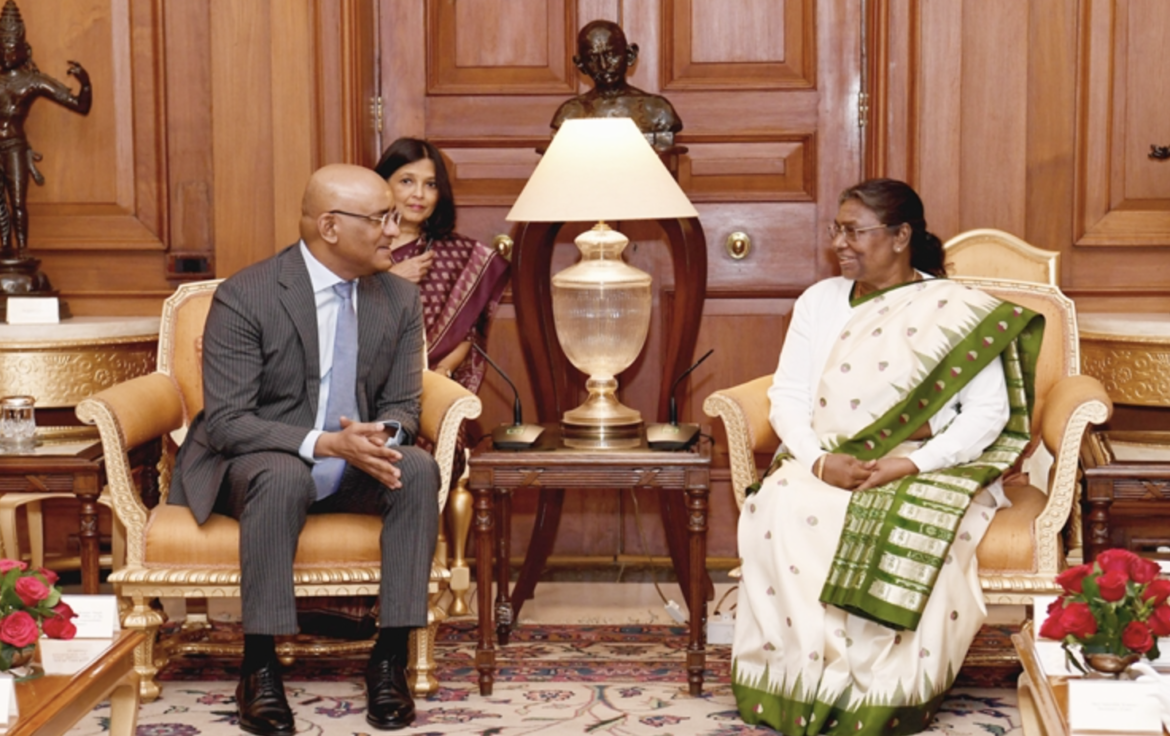
In February Guyana’s Vice President Bharrat Jagdeo arrived in India and met with President Murmu. One of the results of the meeting was a Memorandum of Understanding (pending approval of respective governments) over future oil sales. Additionally, it was reported that there was potential for Indian investment in Guyana’s oil sector. . Guyana has indicated that it plans to auction 14 offshore oil blocks, while taking back 20 percent of the Stabroek offshore oil block from ExxonMobil which could be sold to Indian oil companies.
The Jagdeo visit also discussed tapping Indian skilled workers to help develop Guyana’s emerging gas industry as well as help in several other sectors, including agriculture. Guyana also indicated an interest in defense cooperation (including potential fast patrol boat purchases from India) and improved transportation linkages between the two countries, which is expected to be backed by an air services agreement (ASA). . This would allow airlines from both countries to travel back and forth. Currently travel must transit through New York or London.
The main driver from the Indian side is energy. Despite efforts to develop clean energy, India remains heavily dependent on fossil fuels. Coal is the South Asian country’s leading energy source, accounting for 46 percent of total energy in 2021, followed by oil (23 percent), biomass (21 percent), natural gas (6 percent) and primary electricity defined as hydro, nuclear, water and wind (4 percent). .
Although New Delhi understands the need to reduce its carbon footprint, it is not likely to make a radical shift away from fossil fuels anytime soon. Prime Minister Modi announced in 2021 that his country would zero out its greenhouse gas emissions by 2070. . This means that while India will work on developing clean energy alternatives, it will continue to be a major buyer of oil and gas over the medium term.
India’s energy picture has been further complicated by the Russo-Ukrainian War, which commenced in February 2022 and resulted in Western economic sanctions on the sale of Russian oil and natural gas. To mitigate its lost Western markets, Russia significantly increased its oil exports to “friendly” countries, like China, India, and Turkey. .
In late 2022, Russia passed Saudi Arabia as India’s largest source of oil and in January 2023, the South Asian country’s Russian oil imports rose to a record 1.4 million barrels per day, up 9.2 percent from December. . While cheap Russian oil is being soaked up by India’s refiners, New Delhi is under pressure from the United States on this issue. New Delhi needs U.S. support to counterbalance China, with which it fought bloody border disputes in the Himalayas in 2021 and 2022. In this context, positive U.S.-India relations are key to balancing China. Enter Guyana.
Although Guyana is far from India, it offers a friendly and less controversial oil source than Russia or, for that matter, Venezuela which had earlier been an important supplier. Guyana is also friends with the United States; Indo-Guyanese constitute the country’s largest ethnic group (around 40 percent of the total population); and the two countries share a parliamentary form of government. Indian and Guyana also share faiths in Hinduism and Islam and similar experiences as British colonies.
For Guyana, deeper relations with India offers an opportunity to diversify its trade and investment partners. While the U.S. has positive relations with Guyana and remains its major economic relationship, especially considering the presence of U.S. energy companies like ExxonMobil and Hess, Indian involvement could broaden the investment base. A fulsome Indian economic engagement could also help contain the influence of China, which is active in trade, the oil industry and infrastructure development.
There are limits as to what India can offer Guyana and vice versa. It is easy to take a cynical view and opine that Guyana is after fast Indian money and that the Ali government is pandering to its Indo-Guyanese base. Moreover, India’s trade with Guyana, while on the upswing, remains relatively small; according to the International Monetary Fund’s Direction of Trade statistics for 2022, India was Guyana’s 9th largest source of imports and 28th in terms of exports.
Looking ahead, Guyana’s national interests are to maintain its independent role in the global economy, not become a satellite of large power, and not fall victim to the Dutch disease (which afflicts oil-producing countries). For India, Guyana could serve as a friendly source of oil and, over time, natural gas. A more developed relationship with Guyana could also help India develop a larger role in nearby Suriname, which has yet to start exporting oil. Indeed, Suriname’s President Chan Santokhi also met with India’s Prime Minister Modi in January 2023. A more developed Indian role would broaden the set of economic relationships that have emerged with the Southern Caribbean Energy Matrix. A deeper Indian engagement in Guyana could help counterbalance China’s influence in the Caribbean and Latin America, something that plays well to Washington’s strategic concerns.
Scott B. MacDonald is a Fellow with the Caribbean Policy Consortium and chief economist at Smith’s Research & Gradings. Prior to that, he was the head of research at MC Asset Management LLC, a wholly-owned subsidiary of Mitsubishi Corporation (2012–2015); head of credit and economic research at Aladdin Capital Management in Stamford, Connecticut (2000–2011); chief economist for KWR International (1999–2000); director of sovereign research at Donaldson, Lufkin & Jenrette (1994–1998); sovereign risk analyst and director at Credit Suisse (1992–1994); and an international economic adviser in the Office of the Comptroller of the Currency in Washington, D.C. (1988–1992). He is the author or editor of 19 books and numerous articles on economic affairs, covering events in the Caribbean, Latin America, Europe, Asia, and North America. He holds a Ph.D. in political science from the University of Connecticut, an M.A. in Asian studies from the University of London’s School of Oriental and African Studies, and a B.A. in history and political science from Trinity College in Hartford, Connecticut. He has been an adjunct professor of political science at the University of Connecticut and is on the Board of Directors for El Centro Hispano, a nonprofit organization whose mission is to assist, support, and strengthen Hispanic families in Westchester County, New York.
Trinidad and Tobago’s Proposed Energy Alliance
By
Riyad Insanally
Last month, Trinidad and Tobago (T&T) Stuart Young proposed a Caribbean energy alliance involving Guyana, Suriname and, of course, his own country. In broad terms, he was offering T&T’s established capacity to process oil and gas from Guyana and Suriname, and T&T’s expertise to help the two relative newcomers build capacity to manage their offshore resources. While Guyana really is the new kid sitting on blocks of ever-increasing resources, at least in the Stabroek Block, it should be borne in mind that Suriname has been a small-scale oil producer since 1982, pumping around 15,000 barrels per day (bpd) from onshore wells. It consequently also has some experience and expertise to share.
Presumably, the Minister is offering T&T’s experience of 100-plus years in the oil industry not only in terms of his country’s successes but also with regard to mistakes made and pitfalls to be avoided. Details regarding the energy alliance proposal are however sketchy. The most we know is that, at the opening session of Guyana’s International Energy Conference on February 14, T&T Prime Minister Keith Rowley declared that T&T was “a viable option” for countries seeking to optimise the speedy monetisation of their hydrocarbon resources without incurring substantial capital expenditure. In this respect, he elaborated that T&T is offering its 10 ammonia plants, seven methanol plants and four LNG facilities to process natural gas from neighbouring countries, as well as proposing taking its 140,000-bpd oil refinery out of mothballs.
In a panel discussion, later that day, on Regional Collaboration, Mr Young revisited the proposal, with important contributions also being made by Robert Persaud, Foreign Secretary in Guyana’s Ministry of Foreign Affairs and Dr Dax Driver, CEO of T&T’s Energy Chamber, the representative private sector organisation for the country’s energy industry.
To add to his Prime Minister’s earlier announcement, Mr Young posited that Guyana, Suriname and T&T need to come together to provide energy security for the region, stressing that T&T has “the intellectual capacity and… the resources.” He placed particular emphasis on natural gas as “the energy fuel of the future”, arguing that the global demand for LNG, ammonia and fertilisers should drive regional collaboration among the three countries to develop their gas reserves.
Clearly, based on what the Prime Minister and Energy Minister had to say, the proposed alliance is of high economic importance to T&T. According to Inter-American Development Bank figures, T&T’s economy contracted every year between 2015 and 2021. Crude oil production has been declining steadily from 144,000 bpd in 2005 to just around 60,000 bpd in 2022.[i] While increasing global demand for natural gas in 2022 has been beneficial to the T&T economy, the country’s LNG sector is operating at 75% capacity, with one of its four liquefaction trains having to be shut down in 2021 due to a lack of natural gas. For this reason, T&T has welcomed the conditional US waiver of sanctions on Venezuela (for which it had long been lobbying), which would allow it to develop the Dragon Field in Venezuelan waters. For this reason, too, T&T would be keen to process natural gas from Guyana and Suriname.
Notwithstanding the obvious element of self-interest in the T&T proposal, regional cooperation to promote energy security among the three southern Caribbean producers of hydrocarbons makes a whole lot of sense. For Guyana, at least, there should be no need to reinvent the proverbial wheel, especially at this early stage of the development of its oil and gas resources. Making use of T&T’s existing capacity and facilities therefore has a certain logical appeal in the context of economies of scale, Guyana’s own lack of domestic technical capacity and the need to avoid white elephant projects. Even as more specific details regarding the proposed energy alliance are awaited, the precise modalities for collaboration and the delivery of natural gas would have to be thoroughly thought out and carefully negotiated.
During the aforementioned panel discussion, Dr Driver underlined Mr Young’s point that there is a lot of capacity in T&T that is available to the entire region, more especially Guyana, adding that regional collaboration can be and should be private sector driven. In this respect, he stated that the private sector – presumably the T&T private sector – could drive industry standards across the region, specifically in terms of safety, skills training, competence development and certification. He also opined that the CARICOM Single Market and Economy (CSME) could be used as the framework to facilitate intra-regional investment and business opportunities. This is all very reasonable.
For his part, Mr Persaud agreed that small size demands collaboration but made it clear that regional collaboration on energy security should naturally lead to collaboration on finding solutions to food insecurity. In other words, regional collaboration should go “beyond energy.” One hopes that the message, put very diplomatically, was not lost on his T&T colleagues. For it is no secret that there have been tensions between Guyanese and Trinbagonians over the newfound eagerness of T&T firms to do business in Guyana.
Moreover, Guyanese businesspeople have long been irritated by non-tariff barriers to trade in T&T, particularly in agricultural products, which continue to frustrate the implementation of the CSME and undermine all the rhetoric about regional collaboration and closer economic ties in CARICOM. Indeed, a case in point is the recent fuss in Georgetown regarding T&T’s failure, either through bureaucratic sloth or an absence of political will, to amend an archaic 1935 Act, which prevents the importation or even the trans-shipment of honey from Guyana to other parts of the region. This is a breach of the Revised Treaty of Chaguaramas, which among other things lays the basis for the CSME, and in defiance of decisions of CARICOM’s Council for Trade and Economic Development (COTED).
For CARICOM, regional collaboration is not only central to the regional integration project, it is an absolute imperative. CARICOM’s energy security strategy is built around harnessing hydrocarbon resources to reduce import dependence, pursuing energy diversification and developing renewables. The idea that Guyana, Suriname and T&T could anchor energy security in the region is not new but, as yet, it has not been fleshed out. The T&T proposal could therefore very well be an important step in this direction, by combining the resources of Guyana, Suriname and T&T, and by leveraging the latter’s considerable experience, technical capacity and facilities.
As Dr Driver has pointed out, the CSME already provides something of a framework for the pursuit of deeper public and private sector partnerships in the region. Now that a formal alliance has been mooted, Mr Young should be encouraged to put some concrete proposals on the table. At the same time, his Government would do well to build trust among all regional partners by taking a holistic approach to regional collaboration, especially by showing real commitment to implementing the provisions of the CSME.
Dr Riyad Insanally, CCH was a career diplomat for 31 years and last served as Guyana’s Ambassador to the United States of America and Permanent Representative to the Organization of American States, from September 2016 to June 2021. He is currently a Senior Fellow at the Caribbean Initiative of the Atlantic Council’s Adrienne Arsht Latin America Center and Senior Advisor for the Caribbean at the Transnational Strategy Group, both in Washington, DC, and a Fellow with the Caribbean Policy Consortium.
Unlocking Guyana’s Oil and Gas Potential: Balancing Energy Development and Environmental Stewardship
The Guyana Business Journal (GBJ) & Caribbean Policy Consortium welcome you to their Whitepaper Webinar Series, on Wednesday, March 08, 2023, at 10:30 AM EST.
Unlocking Guyana’s Oil and Gas Potential: Balancing Energy Development and Environmental Stewardship
See white paper here: Intersection of Energy_Environment in Guyana_Dr_Ulric_Trotz
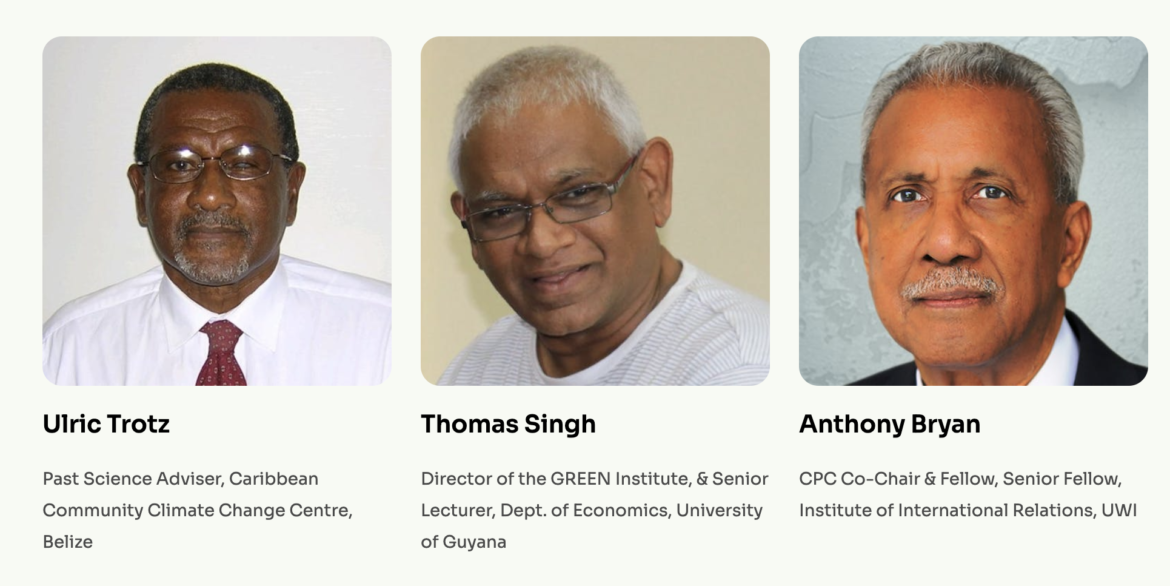
Presenter: Dr. Ulric Trotz, Past Science Adviser, Caribbean Community Climate Change Centre, Belize
Executive Summary: In 2015, significant oil and gas reserves were discovered in Guyana, transforming the country into a major fossil fuel producer. Before this discovery, Guyana, like other vulnerable developing countries in the Caribbean basin, had been advocating for international attention to their exposure to emerging climate risks and for the adoption of policies and provision of necessary support for climate change mitigation and adaptation. These efforts led to a global agreement under the Paris Agreement in 2015 to limit the increase in global average temperature to well below 2°C above pre-industrial levels and to pursue efforts to limit the rise to 1.5°C, among other objectives.
In keeping with its obligations under the United Nations Framework Convention on Climate Change, Guyana developed a Low Carbon Development Strategy and a Climate Resilient Strategy and Action Plan that aim to achieve zero carbon status and climate resiliency in line with the Paris Agreement. However, the discovery of substantial oil and gas resources in Guyana now places the country in a seemingly contradictive position as both a current victim of climate change and an actor that exacerbates the problem.
To reconcile these roles, two factors need to be considered. Firstly, Guyana lacks the resources to build climate resiliency and transition to an affordable and sustainable energy system. Secondly, as the world transitions to net zero, Guyana has the opportunity to use its newfound wealth to implement both mitigation and adaptation strategies. The region can address regional energy and food security, internalize supply chains, and utilize the resources of Guyana, Suriname, and Trinidad and Tobago to facilitate progress in meeting their obligations under the Paris Agreement.
Given the low carbon intensity of Guyana’s oil and gas resources and the feasibility of production compared to global producers, there is an opportunity for Guyana to emerge as a major supplier of fossil fuels during the global transition to net zero. However, Guyana must ensure that its production of oil and gas meets the highest available environmental standards and that the resources accruing are used to facilitate the transition to net zero and to build climate resilience.
Discussants: Dr. Anthony Bryan & Dr. Thomas Singh
Moderators: Dr. David Lewis & Dr. Terrence Blackman.
Guyana: Waiting for ICJ Decision, but also Investing in Security; Part II
By
Ivelaw Lloyd Griffith
This is the second article of a two-part series on the ongoing territorial-judicial saga between Guyana and Venezuela. The first one examined some recent developments in Guyana’s oil exploration and production landscape, which have increased the stakes for the two oil-rich nations. In this concluding article we examine the security investment imperative the government has been pursuing while it awaits the ruling of the World Court.
Moutar and Guitar
Budgetary and other recent actions by the Guyana government suggests that investing in security assets isn’t just attracting platitudes, but tangible action. To use Guyanese parlance, the authorities aren’t just “playing moutar, but also guitar.” Put differently, they are putting their money where their mouth is. For one, budget allocations for this year adopted by the National Assembly for the security services suggest that the government takes the investment in security assets imperative seriously, conscious that the security sector agencies have serious deficits in personnel, equipment, and training.
The budget itself—G$781.9 billion (US$3.7 billion)—is the largest ever in the country’s history. It represents a 41 percent increase over the outlay for 2022, with almost 30 percent drawing on oil revenues, to the tune of G$208.9 billion (US$ 992 million). Moreover, for the first time ever, use has been made of funds from the sale of carbon credits, in the amount of G$31.3 billion (US$149 million). The carbon credits deal was made last year with the Hess Corporation and provides for a minimum of US$750 million to the Cooperative Republic between 2022 and 2032. The initial US$75 payment was made in January 2023 and two additional payments are expected later this year.
The allocation for the army increased from G$17,631,014,000 (US$83,165,493) in 2022 to G$20,228,261,000 (US$95,416,707) for this year. The Guyana Defense Force (GDF) identified some pretty aggressive goals for 2023, including increasing the number of foreign threats averted from two in 2022 to 20 this year, growing the number of officers trained by 100 percent, from 40 last year to 80 this year, and expanding joint exercises from 12 in 2022 to 20 this year. Although there is considerable attention to the police force and other internal security agencies in the 2023 Budget Speech, there was absolutely no mention of the GDF.
As for the police and other internal security agencies, the funding grew from G$51.5 billion (US$242,925,500) expended in 2022 to an allocation of G$58.6 billion (US$276,416,200) for this year. This included G$2.4 billion (US$11,320,800) to upgrade police stations and facilities, money to increase force mobility, and G$2 billion (US$9,434,000) to expand the safe city program in two of the country’s ten administrative regions, key to which is the provision of Intelligence Video Surveillance Command Centers and 911 emergency response capability in those regions.
Security investments and cautionary note
The recent investment in security assets began modestly yet importantly in March 2021 with the commissioning of a new American-made Bell412 EPi medium lift helicopter, acquired for US$9.5 million. This additional resource for the GDF was to enable them to monitor the nation’s fisheries zone, conduct search and rescue operations, and move troops around the country. Three months later the government announced the US$11.5 million order of a monohull patrol vessel from the Louisiana-based ship builder Metal Shark to boost the Coast Guard’s efforts to patrol its Exclusive Economic Zone and fight piracy and illegal fishing.
Mindful of the need to avoid putting all security asset eggs in one acquisition basket, following a visit to India in January this year, President Mohamed Irfaan Ali expressed interest in purchasing two Hindustan Aeronautics Limited, HAL Dornier 228 for the GDF Air Corps, which has a serious aircraft deficit. The two 19-seater Short Takeoff and Landing (STOL) planes will be used to ferry troops and supplies to military bases across Guyana, assist maritime patrols, and transport VIPs.
The security investment from India is part of a broader strategic partnership between the two countries, in the areas of oil and gas, food security, and technology. One hopes that the diversification of security assets soon would be extended to Brazil, an established arms manufacturer with a wide portfolio, with which Guyana once had a strong relationship and remains a key actor in the geopolitical relationship involving Venezuela, as well as a valued ally in the proposed tripartite energy security partnership that would include Suriname.
The security partnership with the United States continues to be strengthened, notably is the three-day visits by SOUTHCOM Commander Admiral Craig Faller in January 2021 and last August by his successor, General Laura Richardson, to meet with political, military, and civic leaders about enhancing security ties between the two nations. Guyana also hosted the SOUTHCOM-sponsored Tradewinds 2021, a training exercise with ground, air, sea, and cyber aspects that brings together forces from the United States and Caribbean and other nations.
Noteworthy, too, Guyana has joined the Barbados-based Regional Security System (RSS). In March 2022 President Ali signed the RSS protocol while in Belize for a meeting of CARICOM leaders, and the following September Guyana formally became the eighth member when President Ali signed the instrument acceding to the RSS Treaty, joining Antigua and Barbuda, Barbados, Dominica, Grenada, St. Kitts and Nevis, St. Lucia, and St. Vincent and the Grenadines in the alliance that dates to 1982, becoming the member with the largest army. Incidentally, both the GDF and the Guyana Police Force (GPF) will participate in the RSS, as is the case with the other RSS members that have both defense and police forces.
For all the commendable investment in assets and strengthening of strategic partnerships, a cautionary note is warranted. Guyana faces both traditional and non-traditional security threats, notably territorial claims by both Venezuela and Suriname in the traditional area, and narco-trafficking, crime and violence, illegal migration, and human trafficking in the non-traditional one. Thus, even with the recent and planned investments the country’s security establishment, it will still face serious capability limitations in terms of personnel, equipment, and training.
However, there may be a risk that leaders in Guyana either are under-appreciating the scope of the threats, over-estimating the extent to which the new assets will address the security deficits, or both. A danger in the offing makes this conclusion plausible. The danger is what military professionals call mission creep: the gradual or incremental expansion of an organization’s mission beyond its original focus or goals, which risks compromising its overall efficiency and operational success because of the lack of commensurate resources to accomplish the expanded mission.
Recent pronouncements at the army’s 2023 officers conference, held on February 9 last, portend such a danger. The Commander-in-Chief contended that in addition to meeting the nation’s security challenges the GDF should rise to the challenge and consider how it will address issues such as the food and energy crises not only in Guyana but in the region. He also touted the idea that the Air Corps could expand its mandate and conduct forest monitoring activities, arguing that “the monitoring of our forest is part of our defense challenge, because it is an important national asset, earning revenue.”
Moreover, the president advocated a role for the GDF in the development of emergency mapping services, noting “In every region, I am tired with the fire tender turning up and they don’t know where the drain is, they don’t know where the trenches are… Is there a cluster map? How do we develop a cluster map for every region, and then a cluster map for different communities?”
In sum, as the waiting game plays itself out, Guyana is making prudent and pragmatic investments in security assets. Nonetheless, the leaders there might do well to guard against mission creep, lest they compromise the ability of the army to deliver effectively on its core mission and undermine the confidence of citizens in both them and it.
______
Ivelaw Lloyd Griffith, a former Vice Chancellor of the University of Guyana, is a Fellow with the Caribbean Policy Consortium and Global Americans. His next book, Challenged Sovereignty: The Impact of Drugs, Crime, Terrorism, and Cyber Threats in the Caribbean, will be published by the University of Illinois Press.
Guyana: Waiting for ICJ Decision, but also Investing in Security, Part 1
Guyana: Waiting for ICJ Decision, but also Investing in Security; Part 1
By
Ivelaw Lloyd Griffith
This is the first of a two-part series on the ongoing territorial-judicial saga between Guyana and Venezuela. Here we provide some recent developments on Guyana’s oil exploration and production landscape, which have increased the stakes for both nations. In Part II, we examine some of the security investments the government is making while the judicial drama plays out.
Waiting, but …
In a two-part series in OilNOW last fall I described the Guyana-Venezuela territorial drama as a waiting game, in that it evokes memories of the award-winning play Waiting for Godot by the famous Irish playwright Samuel Beckett. The waiting game began in 1962 when Venezuela first formally challenged the validity of the Paris Arbitral Award that had settled the dispute between the Bolivarian Republic and Great Britain over the colony then called British Guiana in 1899. The drama assumed new dimensions when, with green-lightening by the United Nations Secretary-General, Guyana took the matter to the International Court of Justice (ICJ) in 2018 after other resolution efforts pursued over several decades had failed.
In keeping with its rules, the Court needed to consider whether it had jurisdiction to hear the case. After deciding in December 2020 that it did, indeed, have the relevant jurisdiction, in March 2021 it gave Guyana until March 8, 2022, to submit its Memorial (case brief) and Venezuela until March 8, 2023, to present its Counter-Memorial. The expectation was that all things considered, a ruling on the substantive case would be made by March 2024.
However, the waiting game assumed new dimensions last June when Venezuela filed preliminary objections to the admissibility of Guyana’s petition. Under ICJ rules, the proceedings on the merits had to be suspended. Guyana was then given until October 7, 2022, to file a response to the objections and the Court held hearings on the preliminary objections from November 17 through November 22, last. The Court likely will render its judgment on Venezuela’s objections by the end of this coming April. So, the waiting game continues.
Waiting is not a strategy, though. As such, the government has been aggressively pursuing its national development goals, including extracting more of its newly found natural resource and investing some of the revenue derived from it. As Finance Minister Ashni Singh reported in his January 16, 2023, Budget Speech in the National Assembly, 2022 was an exploration banner year: 11 new wells were drilled, 10 of them being in the now famous Stabroek Block, which extends over 6.6 million acres (26,800 square kilometers) of maritime space. The new discoveries brought the total discoveries to 40, with 35 in Stabroek alone. Moreover, in December 2022, the authorities launched a new Licensing Round, which will run through this coming April.
Production continued apace, allowing for 102 lifts of crude oil, with revenues augmenting the sovereign wealth fund, called the National Resource Fund. Last year the Fund received just over US$1,099 million. After the transfer of US$607.6 to the government’s budget to fund various initiatives, the Fund had a 2022 end-of-year balance of US$1,271.8 million. The new year brought new bounty to the Land of Many Waters, with an additional discovery on January 23 in the Fangtooth SE-1 well, also in the Stabroek Block.
Towards 1 million barrels per day
Also noteworthy is that the Payara project is expected to begin production later this year, yielding some 220,000 barrels per day, and another project, named Yellowtail, is expected to come on stream in 2025 and produce about 250,000 barrels of crude per day. This should be followed by the Uaru project, which is anticipated to produce another 250,000 barrels per day following start-up in 2027. As a result, the country is set to produce about one million barrels per day before the sun sets on the current decade.
Although Venezuela’s energy profile dwarfs that of Guyana, South America’s sole English-speaking republic now boasts having proven more than 11 billion barrels equivalent of recoverable oil and gas. In all likelihood, this figure will increase as exploration continues to reveal the existence of more black gold. Consequently, Guyana is well positioned to reap enormous wealth, which would enable the nation to be propelled into a development stratosphere not contemplated a few years ago. Indeed, last year the non-oil real GDP growth was pegged at 11.5 percent and the overall economy was estimated to grow by some 62 percent, making Guyana’s economy the fastest-growing one in the world.
There is, therefore, confidence in robust economic growth and long-term revenues from oil. Last month the finance minister assured parliament that “there will be 136 lifts of profit oil from the Stabroek Block in 2023. Within this, Government is projected to have 17 lifts of profit oil from the producing FPSOs (Floating Production, Storage and Offloading vessels), earning an estimated US$1,406.6 million in profit oil and US$225.2 million in royalties in 2023.”
Thus, the waiting game continues. But Guyana’s leaders do not have the luxury to simply wait on the ICJ decision; they have the obligation to attend contentiously to the welfare of the nation, which includes addressing matters crucial to its national interest, a key aspect of which pertains to its territorial integrity. In this respect, in a May 2021 OilNOW opinion, I argued that pragmatism necessitated the pursuit of complementary imperatives – things that need to be actioned, not just spoken about. For me—then and now—three key imperatives pertain to public education, diplomacy, and investing in security assets. Commentaries on the first two are reserved for another time, but the third imperative—investment in security—will be the subject of attention in Part II.
______
Ivelaw Lloyd Griffith, a former Vice Chancellor of the University of Guyana, is a Fellow of the Caribbean Policy Consortium and Global Americans. His next book, Challenged Sovereignty: The Impact of Drugs, Crime, Terrorism, and Cyber Threats in the Caribbean, will be published by the University of Illinois Press.
MEDIA ADVISORY: Transforming Guyana, Episode VII: Guyana’s Indigenous Peoples and the Oil and Gas Economy
Production of the Guyana Business Journal & Caribbean Policy Consortium.

December 19, 2022
MEDIA ADVISORY:
Transforming Guyana, Episode VI: Guyana’s Indigenous Peoples and the Oil and Gas Economy
Recording Available Here:
Key Quotes
Speakers:
- Terrence Blackman: Founder, Guyana Business Journal
- David Lewis: VP, Manchester Trade Ltd. Inc. & Fellow, Caribbean Policy Consortium
- Sydney Allicock: Former Vice President, Guyana & Minister of Indigenous Peoples’ Affairs
- Florence Alexi La Rose: Consultant, Sustainable Development, Community Building, Rural Development, Indigenous Peoples
- Trevon Baird: Lecturer, Department of Language and Cultural Studies, University of Guyana. Coordinator, Amerindian Research Unit
- Charlene Wilkinson: Lecturer, Department of Language and Cultural Studies, University of Guyana. Coordinator, Guyanese Languages Unit
Relevant Quotations:
- Dr. David E. Lewis:
- “There is a need for a wholistic and integrated approach to economic and social development in a way that provides effective participatory integration of the various Indigenous nations and communities in Guyana, which hither to have been to one degree or another not central part of development initiatives of past governments.”
- “We hope that this will lead into more discussions in the future to really leverage the opportunities that Guyana has now to really be cutting-edge examples of how to integrate Indigenous nations into this process and make sure that the resource availability is there to jumpstart and support the development needs of these communities, not only at the national level but particularly at regional and local levels.”
- Sydney Allicock:
- “For us as Indigenous peoples the time is right and it’s now our opportunity to get to that point of being able to manage our affairs. I am truly grateful for this opportunity to talk about the involvement of the Indigenous peoples in the oil economy and the environment.”
- “I would like to say this is a lot of money you’re talking about and it’s a great opportunity to which we need to focus and be able to develop the plan, a plan of action, a plan that will give us not only sustainability but regenerative operations especially with regards to mother nature from where all oil and diamonds have come. […] This is an opportunity for us to have this plan of action that will allow each and every Guyanese to benefit, but more so for us who have been in the hinterland taking care of mother nature while mother nature’s taking care of us—to step up and say exactly how we should be able to manage our development with the support of the new found riches of oil and the carbon credits.”
- “Train people in banking, project managements, industries in various regions. We need to have a group of special youths studying the environment and natural resources so we can follow what we’re receiving and what direction we should take.”
- Florence Alexi La Rose:
- “In the context of oil and gas, there are three things that stands out as necessary to ensure the Indigenous population of Guyana are integrally involved in the process: education, training, and access.”
- “When we talk about education and training, how can we benefit from revenues to upgrade education and training facilities and opportunities available to the hinterland communities? How can oil and gas training be made equally available to hinterland residents? Because of the challenges such as communication, they’re often the last to know about these trainings and opportunities or perhaps only a select few may be aware of what’s happening.”
- “When we talk about access, we’re talking about access to critical information that will inform those opportunities that are available [like] access to opportunities to know when they arise and how to tap into these opportunities? The oil and gas sector does not only require person to drill the oil, there are many other opportunities that support the sector.”
- Trevon Baird:
- “I believe if we are to integrate Indigenous peoples into this transformation that we envision oil wealth will bring to our nation, we have to be prepared to be open-minded about what development is, and recognize the definition might vary across cultural groups.”
- Charlene Wilkinson:
- “When we talk about people owning their communities and owning the direction in which their lives are to go we cannot leave out the issue of language.”
- “We are moving in the right direction, and I can’t be a hypocrite to say leave the oil in the ground.”
- “So what I’m suggesting is that you have 10% of Guyana’s population, fastest growing population [Indigenous], it is something we should rejoice about. If we have that population recognized for the validity they bring to other ways of seeing and other ways of living through their languages, and make that our national project.”
- “I think we can claim an element of settler and element of Indigenous, by really understanding and learning from our Indigenous peoples, so that those literatures that are created in the future […] that the whole universe or several universes of literature can be our future where the Guyanese people take the oil money and turn it into something beautiful.”
Terrence Blackman, Ph.D., Founder & CEO Guyana Business Journal terrence.blackman@guyanabusinessjournal.com
Dr. David E. Lewis, Fellow and Co-Chair, Caribbean Policy Consortium DavidLewis@ManchesterTrade.com
Forum in South Florida to discuss ways to channel Guyana’s massive oil and gas windfall
Guyana is projected to be the world’s fastest-growing economy in 2022 and for many years more

By
Doreen Hemlock
Since massive oil reserves were discovered off its shores in 2015, the small nation of Guyana on South America’s northern coast has seen its economy take off. Economic growth topped 43 percent in 2020, 23 percent in 2021 and was poised to exceed 50 percent in 2022, making Guyana likely the world’s fastest-growing economy this year, according to the International Monetary Fund.
But how can the sparsely populated nation next to Venezuela bring the greatest benefit to its people and avoid the “curse of oil” that has sparked corruption and inequality in some petrostates?
That’s among the questions to be discussed at an event Dec. 14 in South Florida, organized by several Guyanese groups in the US. The hosts aimed to engage the Guyanese diaspora to help their Caribbean homeland find the best ways to channel Guyana’s newfound oil and gas wealth for the common good. Similar events have already been held in New York City’s Queens and Brooklyn, says Terrence Blackman, a longtime academic at City University of New York. He recently founded the Guyana Business Journal & Magazine blog and webinar series, which is helping organize the event.
“What is needed is a sober, calm conversation among all Guyanese across racial lines, across class lines, and we’re trying to provide a forum for that,” says Blackman, referring to sometimes tribal politics of Guyana, where the two main parties are split mainly along racial lines between descendants of enslaved Blacks and indentured East Indians. “We want to take the conversation outside of the political cauldron.”
Blackman is especially keen on improving education in Guyana, so locals can find good jobs not only as engineers or technicians in the oil-and-gas industry but also in the many businesses that will develop from oil and gas: transportation, trade, hotels, facilities management and more.
“You have to build that capacity, because businesses require it,” says Blackman. If people in Guyana can’t fill jobs, others will be brought in, with the potential to disrupt society in the nation of some 800,000 people, he says. “And this is where I think the diaspora is important. You have at least 400,000 Guyanese overseas with expertise in various areas… And we need some clear understanding how you source that capacity first from the Guyanese diaspora and then from beyond.”
Natasha Gaskin-Peters already is working on ways to help local Guyanese companies become more competitive and cash in on the oil-and-gas boost windfall. A PhD economist, she leads the five-year-old Centre for Local Business Development in Guyana. It’s part of an initiative funded by Stabroek Block partners ExxonMobil, Hess and China’s CNOOC, to strengthen local firms to supply the oil sector and beyond.
Gaskin-Peters says the Centre is focusing on training and mentoring to bring Guyanese companies up to international standards, helping boost their internal systems, documentation, and quality controls to become certified in such programs as ISO9001 or the American Petroleum Institute’s QI. It’s assisting a broad range of local companies, mostly small and medium-sized, in industries as diverse as construction, logistics, food catering and welding, she says.
“Guyana’s key focus is diversification,” says Gaskins-Peters, who will visit Florida to speak at the Dec. 14 seminar. “Prior to oil-and-gas, we were an agriculture-dominated country, with mining playing a huge part. Now, we’re looking to expand in agribusiness, use gas onshore to produce energy and reduce the cost of electricity, increase infrastructure projects … It’s really about utilizing the oil-and-gas sector to propel agriculture, industrialization and services to diversify for sustainable development.”
Revenues for diversification are significant. Guyana’s government likely will receive more than $1 billion this year from its share of oil and gas production and $7.5 billion in 2030 alone, as output rises, forecasts Norway-based Rystad Energy consulting firm. That should propel Guyana’s economy to grow by at least 25 percent yearly on average for the next decade and “continue to be the fastest-growing economy on the globe,” says Gaskins-Peters.
Wesley Kirton, president of the Florida-based Guyana American Chamber of Commerce, says he’s helping organize Wednesday’s event, responding to concerns among some in Guyana’s diaspora that they lack up-to-date information on what’s happening in their fast-transforming homeland.
“And we want to give our diaspora an opportunity to share their ideas on how the revenues from oil-and-gas can be used for the benefit of all people of Guyana,” adds Kirton.
The Chamber leader is eager to see oil revenues channeled into agri-business, so that Guyana can not only reduce its own food import bill but also, supply food to fellow nations in the Caribbean Community (Caricom), trimming food imports from countries outside the group.
“The importance of food security manifested itself quite clearly during the pandemic and with the invasion of Ukraine, through supply-chain issues that decreased shipments and raised prices,” Kirton says. “Greater food exports from Guyana fits with Caricom’s objective to reduce the area’s food import bill by 25 percent by 2025.”
The Dec. 14 event, “Navigating a Changing Guyana,” is set for 4:30 to 7:30 pm at the Miramar Cultural Center, 2400 Civic Center Place in Miramar in Broward County. Speakers from Guyana and the US also feature Carl Greenidge, Guyana’s former foreign minister, plus professor and business consultant Jerry Haar, executive director for the Americas at Florida International University, among others.
To register for the free seminar and reception, call 305-968-8398 or email guyamcham@gmail.com. More than 100 people are expected to attend in person and more online.
Doreen Hemlock is a former business reporter for the Sun Sentinel covering energy, ports, and other topics. Born in New York and raised in the U.S. Virgin Islands, she worked 14 years in Peru, Venezuela and Puerto Rico for varied media. She holds an MBA from Columbia University and has been called “Gringa Latina” for her love of Latin America. Doreen has won several prestigious awards for her reporting over the years.
Media Advisory
Transforming Guyana Episode IV: Venezuela-Essequibo Controversy
Production of the Guyana Business Journal & Caribbean Policy Consortium.

September 15, 2022
MEDIA ADVISORY:
Transforming Guyana, Episode IV: Guyana’s emergence as a Petrostate and its implications for the Venezuela Essequibo controversy
Recording Available Here:
Slide Presentation:
Prof. Ivelaw Griffith, Fellow Caribbean Policy Consortium, Tenth Vice-Chancellor and Principal of The University of Guyana from June 2016 through June 2019,
CPC-GBJ webinar September 14 2022_ivelaw
Key Quotes
Carl B. Greenidge, (fmr) Vice President and Minister of Foreign Affairs, Guyana
“Because of the petroleum issue [and] the issue of the exploration of the maritime space, there’s a tendency by the press which sees petroleum as a more sexy area to focus on this matter as though it is a dispute between Guyana and Venezuela over the maritime space.”
“In the first instance, it does not concern the maritime space, it concerns the land boundary, and the claim by Venezuela in regards to this land boundary amounts to three-quarters (74%) of Guyana’s land surface. I don’t think with the exception of what now seems to be the claim of Russia in relation to […] I’m sure there is no territorial claim that currently exists involves such a demand […] it would leave us with practically no Guyana at all.”
“It needs to be said that that the border between Guyana and Venezuela is a border that also meets with Brazil’s border, at which border is one that had also involved the Brazilian claim on the territory that Venezuela currently claims. We signed a tri-party agreement, which is an agreement that says ‘this is where all borders meet, this is where the three borders meet.’”
”If any one of those countries decides that the borders agreement no longer stands, it is not something that Guyana alone can agree to.” […] “Brazil has never agreed that it will cede territory to Venezuela in that area.”
Dr.Anthony Bryan, Fellow Caribbean Policy Consortium and Center for Strategic & International Studies
“Production of gas in Venezuela has been severely constrained due to its poor investments and the fact that its national oil company has always been interested more in oil than in gas. Despite all of that, Trinidad and Tobago will have to conduct a very skillful game of diplomacy with respect to Venezuela and with respect to the claims over the Essequibo region. We’re not going to falter; we are a CARICOM country and will support Guyana’s territorial integrity.”
Dr. Riyad Insanally, Guyana’s (fmr) Ambassador to the United States
“…The oil and gas economy convergence and why it is important to focus on this, because it has serious implications regarding the challenge to Guyana’s geographic sovereign integrity. While I do agree with Professor Bryan as to the continuation of functional cooperation, the need for vigilance is important because many times, governments fail to defend their national sovereignty because of the slippery slope of the comfort of business engagement with counterparts and the oil and gas energy world is known for this”
Contact
Terrence Blackman, Ph.D., Founder & CEO Guyana Business Journal terrence.blackman@guyanabusinessjournal.com
Dr. David E. Lewis, Fellow and Co-Chair, Caribbean Policy Consortium DavidLewis@ManchesterTrade.com